
That call from a tenant about a drafty bedroom or the foggy glass you notice on your morning walk-through isn't just another maintenance task. These are symptoms of a much larger problem: your building's windows are likely failing, driving up energy costs and risking tenant turnover. An apartment building window replacement is a major capital project, and the first step is knowing exactly when to pull the trigger.
Knowing When It's Time for a Window Overhaul
Deciding to replace every window in an apartment building isn't a reaction to a single cracked pane. It’s a strategic investment driven by a pattern of performance failures, ballooning utility bills, and unhappy residents. While obvious issues like broken glass or rotting frames are easy to spot, it's often the less apparent problems that are quietly draining your budget.
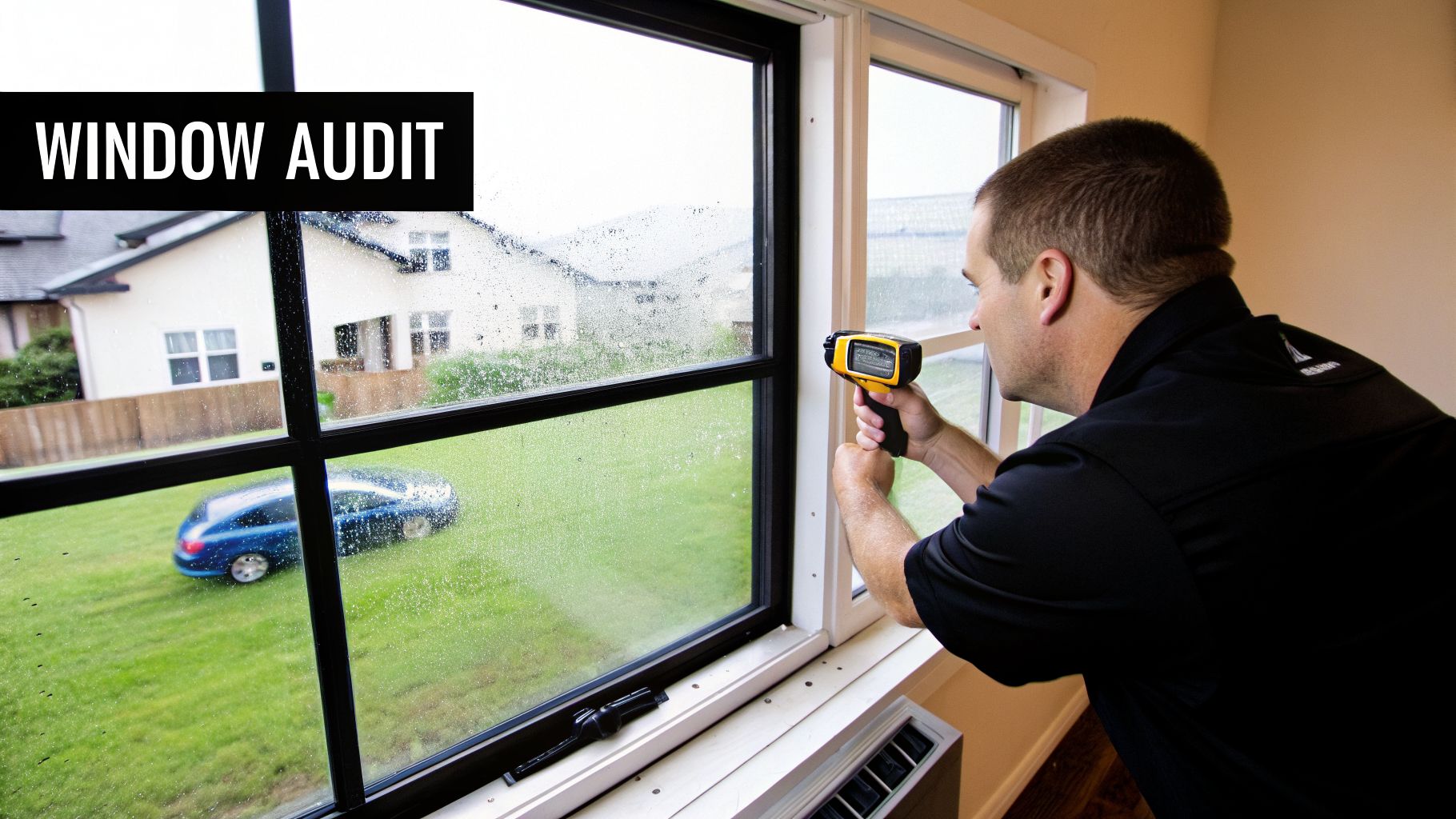
Think of this early phase as a building-wide window audit. You’re moving past a simple visual check to uncover the systemic issues that make a full replacement the only logical financial move.
Spotting the Subtle Signs of Failure
Often, the most convincing reasons for a replacement are hiding in your operational data. Are your property's energy bills climbing every year with no clear cause? Old single-pane windows or units with broken seals provide terrible insulation, which means your HVAC system has to work overtime just to keep tenants comfortable. That energy waste is a direct hit to your net operating income.
Condensation is another tell-tale sign. If you’re seeing persistent fog, moisture, or frost between the panes of glass, the window's airtight seal has failed. Once that happens, any insulating gas inside has escaped, and the window's energy efficiency is gone for good. It's simply not doing its job anymore.
Expert Insight: Don't ignore tenant complaints. A sudden increase in calls about drafty rooms, street noise, or windows that are impossible to open and close points to a widespread problem that piecemeal repairs can no longer solve.
How to Conduct a Building-Wide Window Audit
To make a solid case for replacement and secure the budget, you have to document everything. A detailed audit gives you the concrete evidence needed to move forward. This checklist covers the key things I look for when I walk a property.
Initial Window Assessment Checklist
| Symptom | What to Look For | Potential Impact |
|---|---|---|
| Air Leaks | Feeling drafts near the sash or frame; whistling sounds on windy days. | High energy bills; tenant discomfort and complaints. |
| Water Intrusion | Water stains on walls or floors below windows; peeling paint on sills. | Risk of mold, rot, and serious structural damage. |
| Seal Failure | Fog, haze, or moisture trapped between the two panes of glass. | Complete loss of insulating value; poor energy efficiency. |
| Operational Issues | Windows that are difficult to open, close, or lock; loose or wobbly frames. | Security risks and safety hazards for tenants. |
| Visible Damage | Cracked glass, rotting wood frames, warped vinyl, or broken hardware. | Poor curb appeal; potential for further water and air leaks. |
This process helps you triage the building, separating cosmetic issues from critical failures. You can then create a priority list that becomes the foundation of your replacement strategy—an essential, data-driven approach for a project of this size.
The market reflects this trend; property owners are increasingly investing in upgrades to cut long-term costs. The global windows and doors market is projected to reach USD 291.20 billion by 2030. More telling is that the replacement segment for residential energy-efficient windows is expected to capture 64.1% of market revenue in 2025, as detailed in recent industry reports.
Budgeting Your Project and Unlocking ROI
It’s easy to look at a full-building window replacement and see only a massive capital expense. But that's a shortsighted view. Experienced property owners know this is a powerful investment—one that actively cuts operating costs, increases property value, and keeps tenants happy. Getting your budget right and truly understanding the financial returns are the first steps in building a business case that makes perfect sense.
The final price tag depends on a few key variables, but the biggest drivers are always the window materials and the glass technology you choose. A simple decision between standard vinyl and commercial-grade aluminum, for instance, can swing your per-unit cost dramatically. The same goes for the glass package; stepping up from a basic double-pane unit to one with advanced Low-E coatings and argon gas will cost more upfront, but it also puts your energy savings on the fast track.
Breaking Down the Costs
To get a handle on the real numbers, let's imagine a typical scenario: a 50-unit, low-rise apartment building. Your budget has to cover a lot more than just the windows themselves.
Here’s what a line-item budget usually includes:
- The Windows: The cost of the physical units, which depends heavily on the material, style, and glazing.
- Labor & Installation: This is for the professional crew’s time—from tearing out the old windows to installing the new ones and perfectly finishing the interior and exterior trim.
- Materials & Supplies: Think sealants, flashing, insulation, and fasteners. These are critical for a weatherproof, long-lasting installation.
- Permit Fees: The cost of pulling the required building permits from your city or county.
- Disposal: The expense for properly hauling away and disposing of all the old windows and construction debris.
For a project this size, you absolutely need a detailed, itemized quote from a trusted contractor. This isn't just about seeing the total; it's about understanding where every dollar is going and being able to compare bids apples-to-apples. And don't forget, a tight budget can sometimes spark creative solutions. Looking into options like surplus windows and doors can sometimes yield significant savings on high-quality materials, especially for common areas or standard-sized openings.
Calculating Your Return on Investment
This is where the project gets exciting. When you shift your thinking from upfront cost to long-term ROI, you see how new windows directly improve your Net Operating Income (NOI). The most obvious and immediate return comes straight from lower energy bills.
A window replacement isn't just a defensive repair; it's an offensive financial move. By slashing utility costs and enabling higher rents, new windows can directly increase your property's capitalization rate and overall market value.
This isn't just theory; it's backed by clear market trends. The global market for residential energy-efficient windows hit USD 12.4 billion in 2025 and is on track to more than double by 2035. With the average U.S. housing stock being 40 years old, a modern window upgrade can slash heating and cooling costs by a solid 15-25%.
Here in the Central Valley, we see this firsthand. Companies like Equity Building Materials install systems with advanced low-E coatings that can improve a window's thermal efficiency by up to 40%—a huge win for property managers battling summer heat. You can discover the full findings on the energy-efficient window market and see the projections for yourself.
Unlocking Rebates and Tax Credits
On top of the direct energy savings, you can often find financial incentives to make the numbers even better. Many utility companies and government agencies offer rebates and tax credits for installing energy-efficient products.
For example, a utility might give you a per-window rebate for any units that meet specific U-factor and SHGC ratings. These programs are always changing, so it’s crucial to check what’s currently available. As we head into 2026, your first stops should be the websites for your local utility (like PG&E here in Central California) and the Database of State Incentives for Renewables & Efficiency (DSIRE).
A good window contractor will be on top of these programs and can often help with the paperwork, making sure you get back every dollar you're entitled to.
Of all the steps in a multi-unit window replacement, this is the one that can bring your entire project to a screeching halt. Don't even think about touching a single window until you've squared away your permits.
Getting a Handle on California Building Codes and Permits
For any apartment building window replacement, think of the permitting process not as a hassle, but as the foundation of the job. Trying to sidestep state and local rules is a surefire way to get hit with stop-work orders, hefty fines, and delays that can kill your budget.
In California, the regulations are especially tight. You can’t just start pulling out old windows. Any major window project is considered construction, and your local building department—whether in Fresno, Clovis, or Bakersfield—has the final say. They're tasked with enforcing a mix of state codes and local ordinances that cover everything from safety to energy efficiency.
Key California Regulations You Can't Ignore
California's codes are some of the most detailed in the country. For a multi-family project, a few key standards will absolutely dictate your window choices and how they’re installed.
Here are the big three you need to get right:
- Title 24 Energy Standards: This is California's energy code, and it’s non-negotiable. It sets strict minimums for window performance, especially U-factor (insulation value) and Solar Heat Gain Coefficient (SHGC). In the Central Valley’s intense heat, a low SHGC is your best friend for keeping tenants' cooling costs down.
- Egress Requirements: This is a life-safety issue. Building codes require windows in bedrooms to be large enough for a person to escape during a fire. The rules are very specific about the minimum opening width, height, and overall area.
- Safety Glazing: You'll see this requirement for any glass in what's considered a "hazardous location"—think windows in or next to doors, in bathrooms, or any window that’s low to the floor. The code demands tempered or laminated glass here, which breaks safely instead of into dangerous, sharp shards.
A public housing authority in Minneapolis recently undertook a $2.37 million project to replace old windows across a 110-unit building. A project of that scale is a massive investment, and you can bet every single window was installed in perfect alignment with local codes to protect both the residents and the asset itself.
Pocket Replacement vs. Tearing Out the Frame
The scope of your project will determine how much paperwork you'll face. Your local building department will look at your job in one of two ways.
A simple "like-for-like" replacement (also called a pocket replacement), where you're just swapping an old window with a new one of the exact same size, is the most straightforward path. The permit process is usually simpler, but remember—the new windows still have to meet today's energy and safety codes.
If you plan to change the size or location of a window, however, you're getting into a "new construction" type of installation. This means you’re cutting into the building’s structure, which automatically triggers a much deeper review from inspectors. Expect to provide detailed architectural drawings and possibly even structural calculations.
The Permit Process in the Central Valley
While the exact details can vary slightly from Fresno to Modesto, the core requirements for a permit application are pretty consistent. Get these documents ready before you even head to the planning department.
You'll almost certainly need:
- A completed permit application form from your city or county.
- A clear project description, including the total number of windows you're replacing.
- Window specification sheets from your supplier (like Equity Building Materials) that prove the products meet Title 24 requirements for U-factor and SHGC.
- A basic floor plan showing which windows are being replaced, with any bedroom egress windows clearly marked.
- Proof of your contractor's state license and workers' compensation insurance.
One last pro-tip: before you do anything, check if your property is in a historic district. Many cities have special preservation rules that can heavily influence the style, material, and look of your new windows. Figuring this out early will save you a world of headaches later.
Choosing the Right Windows for Your Building
Selecting the windows for a full apartment building replacement is a huge decision. What you choose will define the property's curb appeal, impact utility bills, and affect tenant comfort for the next 20 years or more. This isn't just about swapping out old for new; it's a strategic investment in your asset. You have to find that sweet spot between upfront cost, long-term durability, maintenance demands, and pure aesthetics.
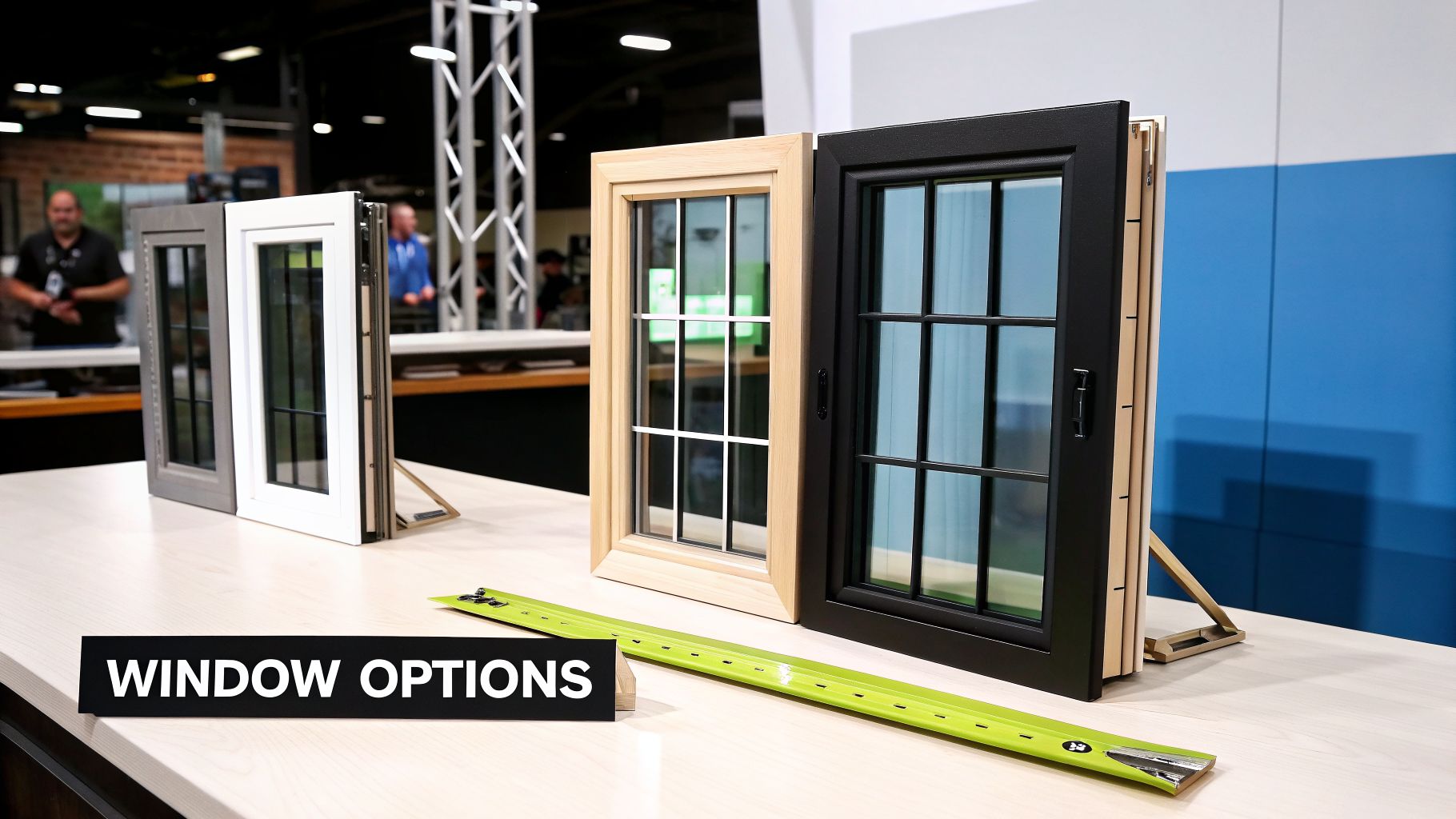
Let's walk through the materials and glass technologies you'll be looking at. Making a well-informed choice here can pay off for decades.
Comparing Window Frame Materials
The frame is the window's skeleton. It determines strength, lifespan, and how well it insulates. For most multi-family buildings, you're going to be looking at vinyl, aluminum, or fiberglass. Each one has its place.
Deciding on the best material for your apartment building comes down to balancing budget, desired look, and long-term performance goals.
Apartment Window Material Comparison
| Material | Average Cost | Lifespan | Maintenance | Best For |
|---|---|---|---|---|
| Vinyl | $$ | 20-30 years | Low (no painting) | Budget-conscious projects, rental properties, and maximizing energy efficiency at a low cost. |
| Aluminum | $$-$$$ | 30-40 years | Low | Modern designs, large window openings, and durability in high-traffic commercial areas. |
| Fiberglass | $$$$ | 40-50+ years | Very Low | High-end properties, extreme climates, and projects where maximum durability is the top priority. |
Vinyl is often the go-to for a reason, but it's not the only option. Aluminum offers a sleek, modern profile you can't get with vinyl, while fiberglass provides unmatched strength and longevity if the budget allows. For most rental property owners, the value proposition of high-performance vinyl windows in our guide is tough to beat.
The reality is that older apartment buildings are a goldmine for window replacement projects. An estimated 70% of U.S. multifamily units built before 1980 are still dealing with inefficient, single-pane windows. While the overall installer market might see dips, smart property managers can find tremendous value. The adoption of efficient Low-E glazing has already jumped 25% since 2020, and that trend is only accelerating as owners see the real savings on utility bills. You can learn more about window installation industry trends and see where the market is headed.
Understanding Glazing and Glass Technology
The glass package is just as crucial as the frame—maybe even more so. This is where the magic of energy savings really happens. When you get a quote, you'll see a few terms that matter a lot.
Low-E Coatings: Think of "low-emissivity" coatings as invisible, heat-reflecting shields. These are microscopically thin layers of metal oxide on the glass. In a hot climate like California's Central Valley, they're designed to reflect the sun's heat out, keeping apartments cooler and slashing A/C costs. In cold climates, they can be configured to keep furnace heat in.
Argon Gas Fill: Most quality double-pane windows today are filled with a harmless, inert gas like argon between the panes. Argon is much denser than regular air, so it acts as a better insulator. It dramatically slows the transfer of heat or cold right through the glass.
Double-Pane vs. Triple-Pane: Let's be practical. For almost any apartment project in California, a well-built double-pane window with a good Low-E coating and argon gas fill will easily meet or exceed Title 24 energy codes. Triple-pane is usually overkill unless you're in an extreme climate or trying to achieve the absolute highest level of soundproofing next to a freeway.
When to Consider a Commercial Storefront System
While standard residential-grade windows are perfect for individual units, your lobby, leasing office, and ground-floor amenities need something tougher. This is where a commercial storefront system is the right tool for the job.
Storefront systems are purpose-built for high-traffic public spaces. They use thicker, more robust aluminum frames and can accommodate massive panels of glass, creating an open, impressive, and durable entryway. They are engineered to handle constant use and can be paired with commercial-grade doors that operate flawlessly for years.
Upgrading your lobby and common areas with a storefront system isn't just a repair—it's a statement. It elevates the entire property's look, signaling quality and security to both current and prospective tenants from the moment they arrive.
Alright, you've picked the windows and wrestled with the permits. Now for the real test: getting them installed across an entire building—or several—with dozens of residents living their lives right in the middle of your work zone.
This is where the project jumps off the blueprints and into people’s homes. Nailing the logistics of the installation itself is what separates a smooth, successful upgrade from a logistical nightmare of delays and angry tenant phone calls.
The Installation Game Plan: Phasing and Staging
Trying to replace every window at once would be chaos. You need a solid phasing plan to break the project into logical, manageable chunks. Think of it as your operational playbook. Over the years, we've seen a few tried-and-true strategies work best.
- Building by Building: This is the go-to for garden-style complexes. You contain the entire operation—crews, materials, noise, and all—to one building at a time before moving on. It’s clean and easy to manage.
- Floor by Floor: For mid-rise and high-rise buildings, this is often the most sensible approach. Your crew can start at the top floor and work their way down (or vice-versa), keeping the disruption contained to one level at a time.
- Vertical Stacks: This is a more advanced, highly efficient method. Installers work on the same unit line down the entire building (all the '-01' units, then all the '-02s'). If your layouts are mirrored, a crew can get into a rhythm, repeating the exact same job from floor to floor.
Which one is right for you depends on your property’s layout and how many crews you have on-site. You'll also need a material staging area. This is a designated, secure spot—maybe a corner of the parking lot or an empty storage unit—to store new windows and collect the old ones for disposal. Keeping this organized is key to an efficient workflow.
A seamless installation in an occupied building is non-negotiable. One housing authority's recent $3.17 million project to replace windows in a 182-unit high-rise shows the scale and complexity involved. Executing a project of that magnitude requires meticulous coordination to ensure resident safety and project continuity.
Keeping Tenants in the Loop: Your Communication Playbook
If there’s one golden rule for a multi-family installation, it’s this: no surprises. Proactive, clear, and consistent communication is the key to keeping your residents happy and cooperative.
Don't just send one notice and call it a day. A steady stream of information is what works. Start with a building-wide announcement 3-4 weeks out, explaining the project and its benefits (better insulation, lower energy bills, more comfort). This gives everyone a heads-up.
Then, about 1-2 weeks before their specific building or floor is scheduled, give them a more detailed schedule and instructions. This is when you tell them what they need to do to prepare. Finally, post a notice directly on their door 24-48 hours beforehand as a final, can’t-miss reminder.
Be crystal clear about what you need from them. Residents must clear the area around their windows, moving furniture and personal items at least 3-5 feet away. Spell it out: "Please clear everything off your window sills and move any couches, desks, or beds away from the interior work area." This single step prevents accidental damage and lets the installers get right to work.
Why Your Choice of Installer Is Everything
This kind of project is absolutely not the place to cut corners with a handyman or day laborers. You need a professional, licensed contractor who specializes in working in occupied units and, ideally, uses their own in-house installation teams, not a rotating cast of subcontractors.
An experienced crew, like the ones we have at Equity Building Materials, brings more than just tools. They bring an understanding of how to operate in someone's personal space—protecting flooring, controlling dust, and communicating respectfully with residents who might be working from home.
Most importantly, they are fully covered by both general liability insurance and workers’ compensation. This is a non-negotiable. If an uninsured worker gets hurt on your property or accidentally damages a tenant’s high-end TV, that liability could fall squarely on you. Hiring a professional, insured team completely removes that risk, giving you the peace of mind that the job will be done right and your investment is protected from start to finish.
How to Find and Vet the Right Window Contractor
After you’ve done all the legwork—the planning, the budgeting, the code research—the entire success of your window replacement project rests on one final, crucial choice: the contractor you hire.
I've seen it time and again over the years: the crew you bring on-site will have a bigger impact on the final outcome than the windows themselves. The right partner means quality craftsmanship and a smooth process. The wrong one? It can open the door to delays, blown budgets, and headaches that last for years.
Finding a truly qualified commercial window installer, especially one who knows the ins and outs of multi-family properties here in the Central Valley, takes more than a quick Google search. This is a big deal. You’re not just hiring a crew; you’re entrusting someone with your asset and your tenants' homes.
The Absolute Must-Haves Before You Talk Price
Before you even glance at an estimate, any potential contractor needs to meet a fundamental standard of professionalism. If a company hesitates to provide these documents, it’s a non-starter. There’s simply no room for compromise here.
- A Valid CSLB License: In California, any construction job over $500 legally requires a licensed contractor. You absolutely should verify their license status on the Contractors State License Board website. For a company like ours, that’s CSLB #963161.
- Solid General Liability Insurance: This is what protects your property if something goes wrong. A legitimate commercial contractor will carry a policy with coverage high enough for large-scale apartment projects.
- Workers' Compensation Insurance: This is non-negotiable. It protects you from being held liable if a worker gets injured on your property. Without it, you could be on the hook for medical bills and lost wages.
Don’t just take their word for it. Ask for the certificates and make the calls to verify the policies are active. This five-minute task can save you from a world of financial and legal trouble.
Reading Between the Lines on an Estimate
Once you have a few qualified bidders, the estimates will start to arrive. It’s always tempting to go for the lowest number, but in commercial window replacement, the cheapest bid often hides the biggest risks. A suspiciously low price can be a red flag for an unlicensed operator, an uninsured crew, or corners cut with subpar materials.
A detailed, professional estimate is a sign of a contractor who truly understands the scope of your project. Vague, one-page quotes that don't itemize costs for labor, materials, and permits are a major warning sign.
Look for a partner who provides a transparent, broken-down proposal. You should see the exact window models, material costs, labor charges, permit fees, and disposal costs all clearly listed. This detail shows they’ve done their homework and allows you to compare quotes accurately.
Beyond the paper, a company’s history and reputation speak volumes. Taking a moment to see what past clients have said about their experiences can give you real insight into their reliability and craftsmanship long before they set foot on your property.
The Value of a Local Partner with In-House Teams
When you're vetting contractors, there's one question you have to ask: "Do you use your own employees or do you subcontract the installation?" The answer tells you a lot. A company that uses its own in-house, trained installers offers a level of consistency and accountability you just can't get from one that pulls together random crews for each job.
Think about it—in-house teams are trained on the company's specific products, standards, and processes. That consistency is everything when you need every single window across 50, 100, or more units installed to the exact same high standard.
The process for a well-organized team is built on a foundation of clear planning, communication, and execution, as shown below.
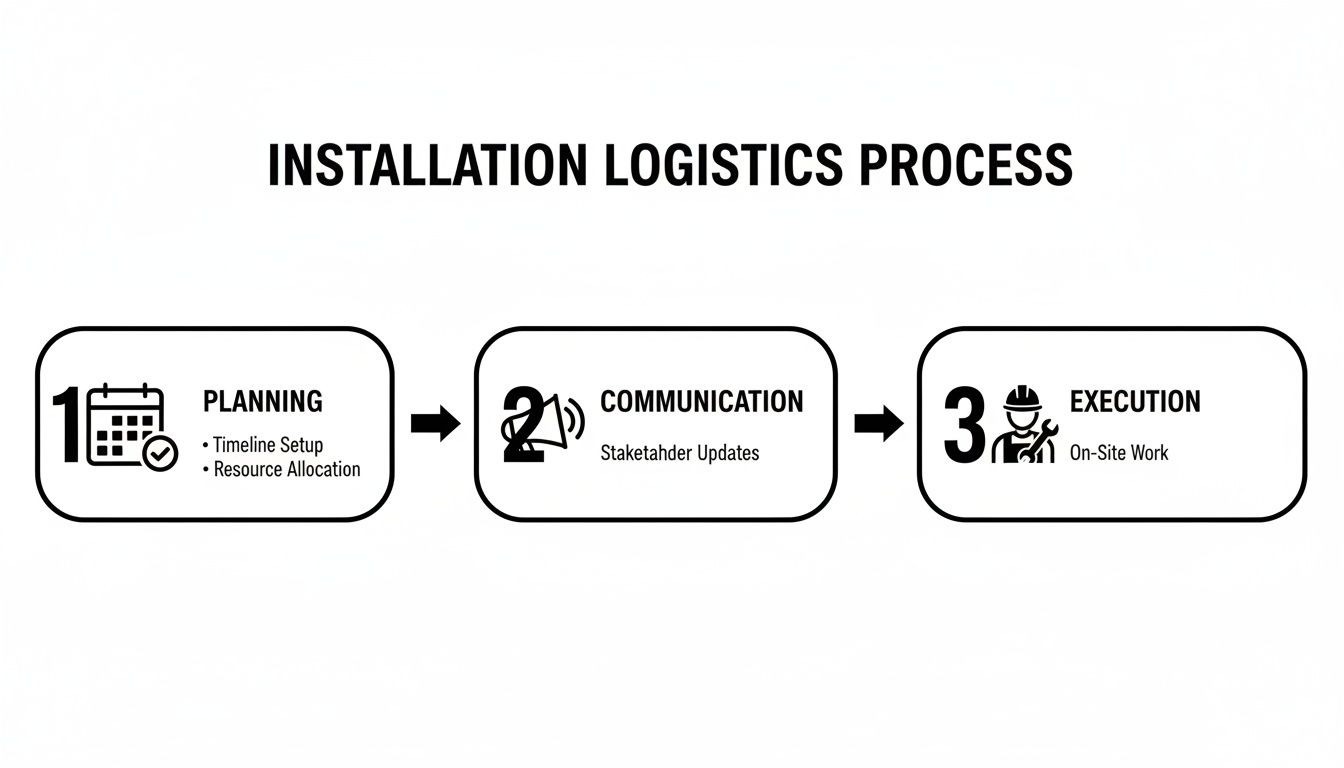
This kind of structured approach is what separates a smooth, professional project from a chaotic one, especially in a multi-family setting.
Finally, there's real value in a contractor with a physical presence—a local office and a showroom. A showroom lets you see, touch, and operate the windows before making a decision. More importantly, a local brick-and-mortar location is a sign of stability. It means they're invested in the community and will be right here to stand behind their work for years to come.