
Let's get right to it. You've probably heard about argon-filled windows, but what exactly is that? Argon is an invisible, non-toxic gas that window manufacturers use to fill the space between the panes of glass in modern windows.
Think of it this way: a standard, air-filled window is like using a thin paper bag to keep your drink cold. An argon-filled window, on the other hand, is like a premium, vacuum-insulated tumbler. Its whole purpose is to slow down heat transfer, which helps keep your home warmer in the winter and much cooler in the summer.
Understanding Argon Gas in Windows
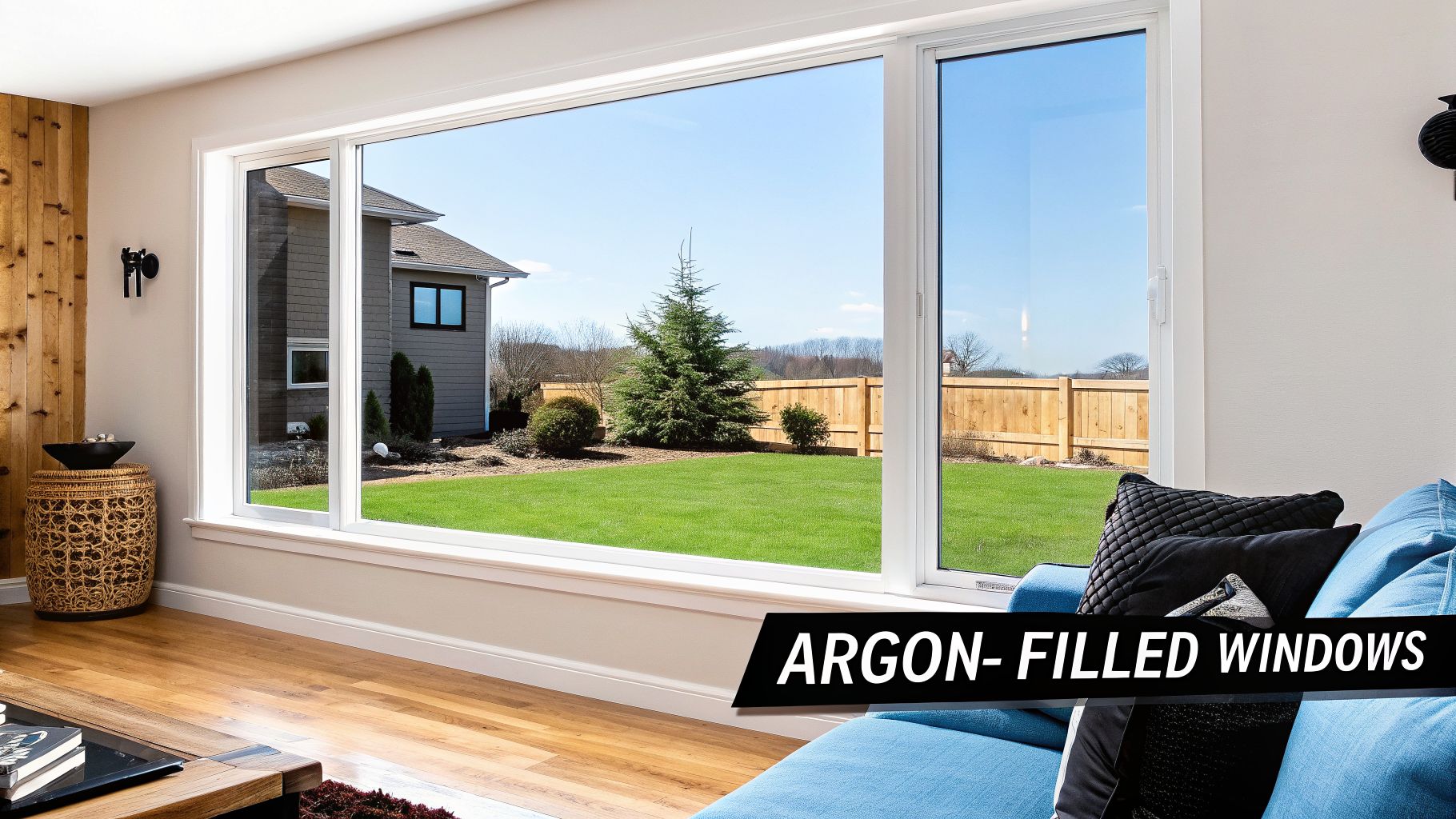
Argon is what’s known as a noble gas. Don’t let the fancy term fool you—it just means it's completely colorless, odorless, and chemically stable. This inert nature makes it perfectly safe for use in your home. Window makers pump this gas into the sealed gap inside an insulated glass unit (IGU), which is the technical name for a double- or triple-pane window assembly.
The real benefit comes from argon's physical properties. It’s about 38% denser than regular air. This extra density makes it "lazier," meaning it doesn't circulate as readily within the window pane. This dramatically reduces convection, which is the process where air currents transfer heat. So, when summer heat tries to move through your window, the dense argon gas acts like a traffic jam, slowing that heat transfer way down. The same principle works in reverse during winter, keeping your precious furnace heat inside.
How Argon Boosts Window Performance
The number one reason to choose argon-filled windows is the huge jump in thermal performance. Because argon is a much poorer conductor of heat than air, it creates a powerful insulating barrier right in the middle of your window.
Just how much better is it? Argon has about 67% lower thermal conductivity than air. That's a massive difference. This buffer is what helps maintain a stable, comfortable temperature inside your home, no matter what's happening outside.
The simple switch from air to argon can reduce heat loss through the glass by up to 30-40%. For homeowners and contractors in places with significant temperature swings, like Fresno, that translates directly into better energy efficiency and real-world savings.
This improved insulation means your HVAC system doesn't have to kick on as often or run as long to keep you comfortable. Over time, that adds up to noticeable savings on your monthly energy bills. If you want to dig deeper, exploring market insights on gas-filled IGUs can show you just how big of an impact this technology has. Ultimately, adding argon gas turns a standard window into a high-performance shield against the elements.
How Argon Gas Actually Insulates Your Home
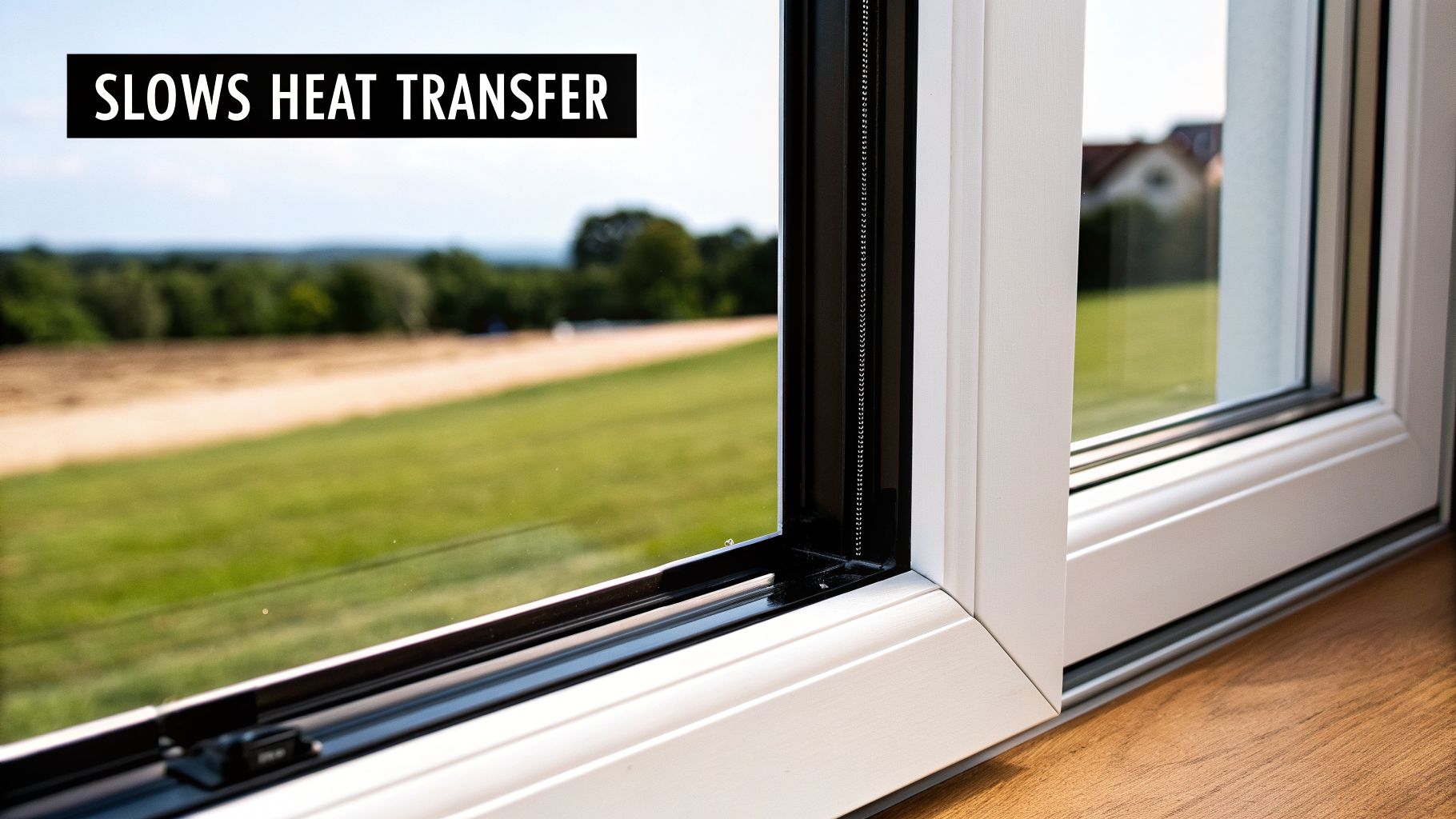
So, how can an invisible gas make such a real difference in your home's comfort and energy bills? It all comes down to its density and how it resists movement. Imagine trying to run through a swimming pool versus running through open air. The much denser water slows you down significantly—and argon gas does the exact same thing to heat.
Argon gas is about 38% denser than air. This extra density is the key to slowing down a natural process called convection that happens inside the window unit. Convection is simply heat transferring through the movement of air. Warm air rises and cool air sinks, creating a constant loop that moves heat from one pane of glass to the other.
Because argon is so dense and "lazy," it resists this movement and breaks the convective cycle. Instead of heat easily traveling from your warm interior pane to the cold exterior pane in winter, the argon gas acts like a thick, stagnant blanket. It effectively traps your expensive heated air right where you want it: inside.
Translating Science to Real-World Results
This superior insulation has a direct impact on your window's performance, especially its U-factor. U-factor is a grade that measures how well a window prevents heat from escaping; a lower number means better insulation. Filling the space between the panes with argon gas is one of the single most effective ways to lower a window’s U-factor.
A lower U-factor leads to benefits you can actually feel and see on your utility bills:
- Eliminating Cold Spots: Argon-filled windows help keep the interior pane of glass much closer to room temperature. This gets rid of those uncomfortable cold drafts you often feel when sitting near old, inefficient windows.
- Reduced Energy Consumption: By slowing down heat transfer, your furnace and air conditioner don't have to work nearly as hard to keep your home at a steady temperature. This translates directly into a noticeable drop in your monthly heating and cooling costs.
This isn't newfangled tech; it's been a cornerstone of energy-efficient building for decades. After the Energy Policy Act of 1992 pushed for better window performance in the U.S., the use of argon-filled windows exploded, going from under 10% to over 75% of new installations by 2010. By boosting a window’s R-value (a measure of thermal resistance) from a standard R-2 with air to R-3.5 or higher, argon cuts heat conduction by more than 33%. You can dig deeper into the industry trends in this insulated glass market report.
When you combine an argon gas fill with modern Low-E coatings, a window becomes a powerful, year-round barrier. It rejects unwanted solar heat in the summer and holds onto valuable indoor warmth during the winter, ensuring consistent comfort.
Ultimately, choosing windows filled with argon gas is a smart, practical decision that pays off in efficiency. For a closer look at how these features come together in modern designs, you might find our guide on high-performance vinyl windows helpful.
Real-World Benefits of Argon-Filled Windows
Let's move past the science for a moment and talk about what really matters: what can you actually expect from argon-filled windows in your own home? The most immediate impact you'll see is on your energy bills. Since argon is such a great insulator, it gives your HVAC system a much-needed break, which translates into real cost savings month after month.
This improved insulation acts like a powerful thermal shield for your home. On a blistering summer day, it keeps the oppressive heat from seeping in. When winter arrives, it keeps that expensive heat your furnace is pumping out right where you want it—inside. Your HVAC system simply won't have to work as hard, and that's a direct win for your wallet.
Superior Year-Round Comfort
Saving money is great, but perhaps the benefit you'll appreciate most every single day is how much more comfortable your home feels. Argon-filled windows create a more stable indoor temperature, finally getting rid of those annoying hot and cold spots you always find near old, drafty windows.
No more feeling an icy chill when you're sitting by the window in January or getting cooked by the sun in July. This thermal stability makes your entire living space more enjoyable all year long, turning those once-uncomfortable areas into your new favorite spots to relax.
A Quieter and Healthier Home
The advantages don't stop at temperature, either. Argon gas also does a fantastic job of dampening sound, making your windows a surprisingly effective barrier against the noise of the outside world.
- Noise Reduction: Because argon is denser than air, it helps muffle all sorts of exterior sounds—think traffic, noisy neighbors, or the Sunday morning lawnmower brigade. The result is a much quieter and more peaceful home.
- Condensation Prevention: Argon works to keep the surface of the interior glass pane warmer. This simple fact dramatically reduces the chances of seeing condensation, fog, or frost build up on your windows, especially during a cold snap.
- Improved Home Health: By stopping condensation, you're also protecting your home from the moisture damage that often follows. This helps prevent mold and mildew from growing on window sills and frames, leading to better indoor air quality and preserving your home's structure. You can learn more about how quality materials contribute to a healthier home in our overview of durable building materials.
In the end, choosing argon-filled windows is an investment in your home's total environment. You get a powerful combination of energy savings, better comfort, less noise, and protection against moisture. It’s a smart upgrade that pays you back not just in dollars saved, but in a higher quality of life. The quieter, more comfortable, and healthier space it creates is a valuable addition to any home.
Choosing Your Window Fill Gas: Argon vs. Krypton
When you're shopping for energy-efficient windows, you'll quickly hear talk about the gas sealed between the panes of glass. While plain old air is the most basic option, it's also the worst insulator. For modern windows, the real decision comes down to two high-performance noble gases: argon and krypton.
Argon has become the industry standard for a good reason. It offers a huge boost in insulating performance over air, but at a very manageable cost. This makes it the perfect, cost-effective choice for the most common window setup out there: double-pane units with a standard ½-inch gap between the panes.
Krypton: The High-Performance Alternative
So, what about krypton? Think of krypton as the premium, specialized option. It's an even denser gas than argon, which makes it a better insulator. This superior performance really comes into play when the space between the glass is tight—typically less than ⅜-inch.
Krypton is also the go-to gas for ultra-efficient triple-pane windows. Its incredible density maximizes insulation in these multi-layered units without making them overly thick or heavy. As you might expect, this top-tier performance comes with a much higher price tag. Krypton is rarer and more expensive to source than argon.
The infographic below really captures why argon has become the default choice for most homeowners looking for a solid upgrade.
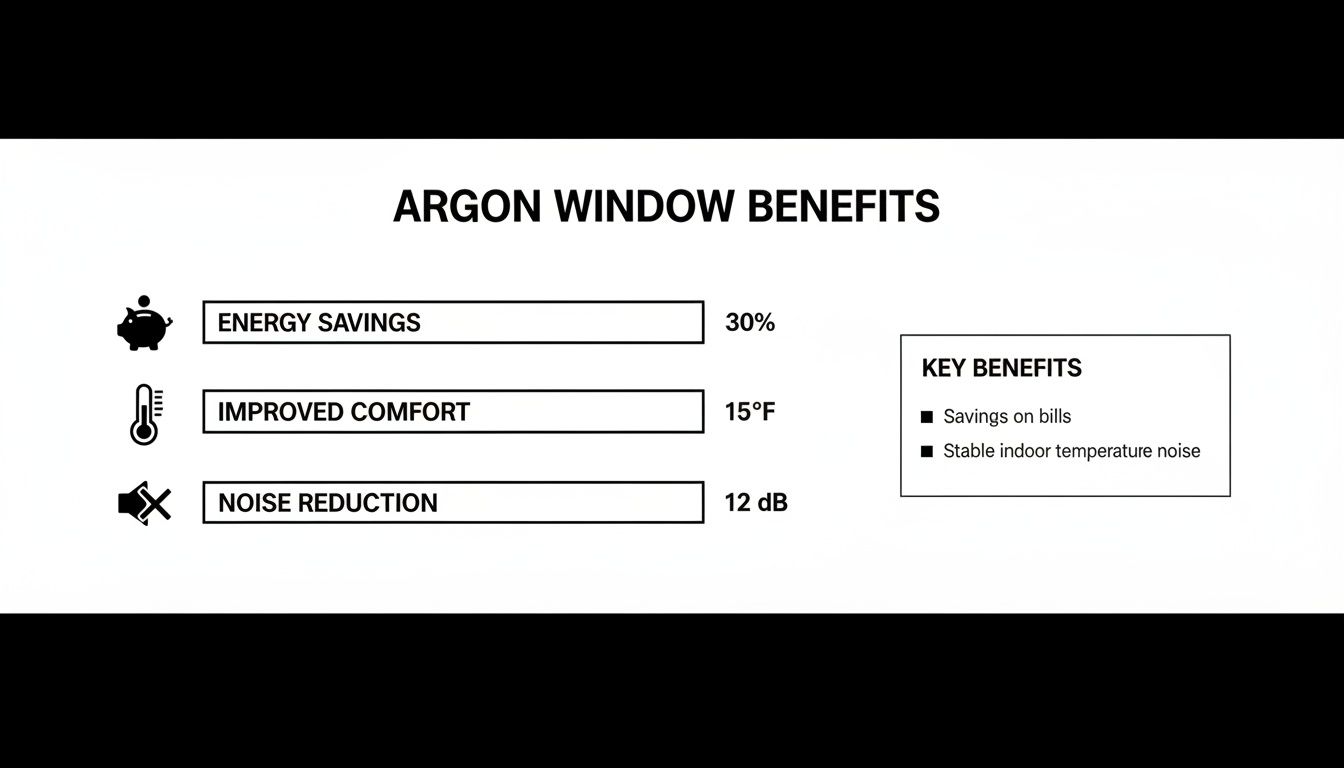
As you can see, it hits on three key benefits that homeowners care about: real energy savings, a more comfortable home, and even a bit of peace and quiet.
Gas Fill Comparison: Air vs. Argon vs. Krypton
To make the best decision, it helps to see how these gases stack up head-to-head. The right choice for you will depend on your budget, your climate, and your specific performance goals.
This table breaks down the key differences between the three common fill options.
| Attribute | Air | Argon | Krypton |
|---|---|---|---|
| Performance | Basic | High | Very High |
| Cost | Lowest | Moderate | Highest |
| Best For | Outdated or basic windows | Standard double-pane windows | Triple-pane or narrow-gap windows |
For most window replacement projects, argon simply provides the best bang for your buck.
For the vast majority of window replacements, argon delivers the best return on investment. It provides nearly all the insulating power needed for a typical home at a fraction of the cost of krypton, making it the smartest and most practical upgrade.
Unless you live in an extremely cold climate where triple-pane windows are a necessity, or your project has design constraints that require a very thin window unit, argon is the clear winner for value and efficiency. It’s the technology that puts high-performance windows within reach for just about everyone.
Addressing the Top Concern: Leaks and Lifespan
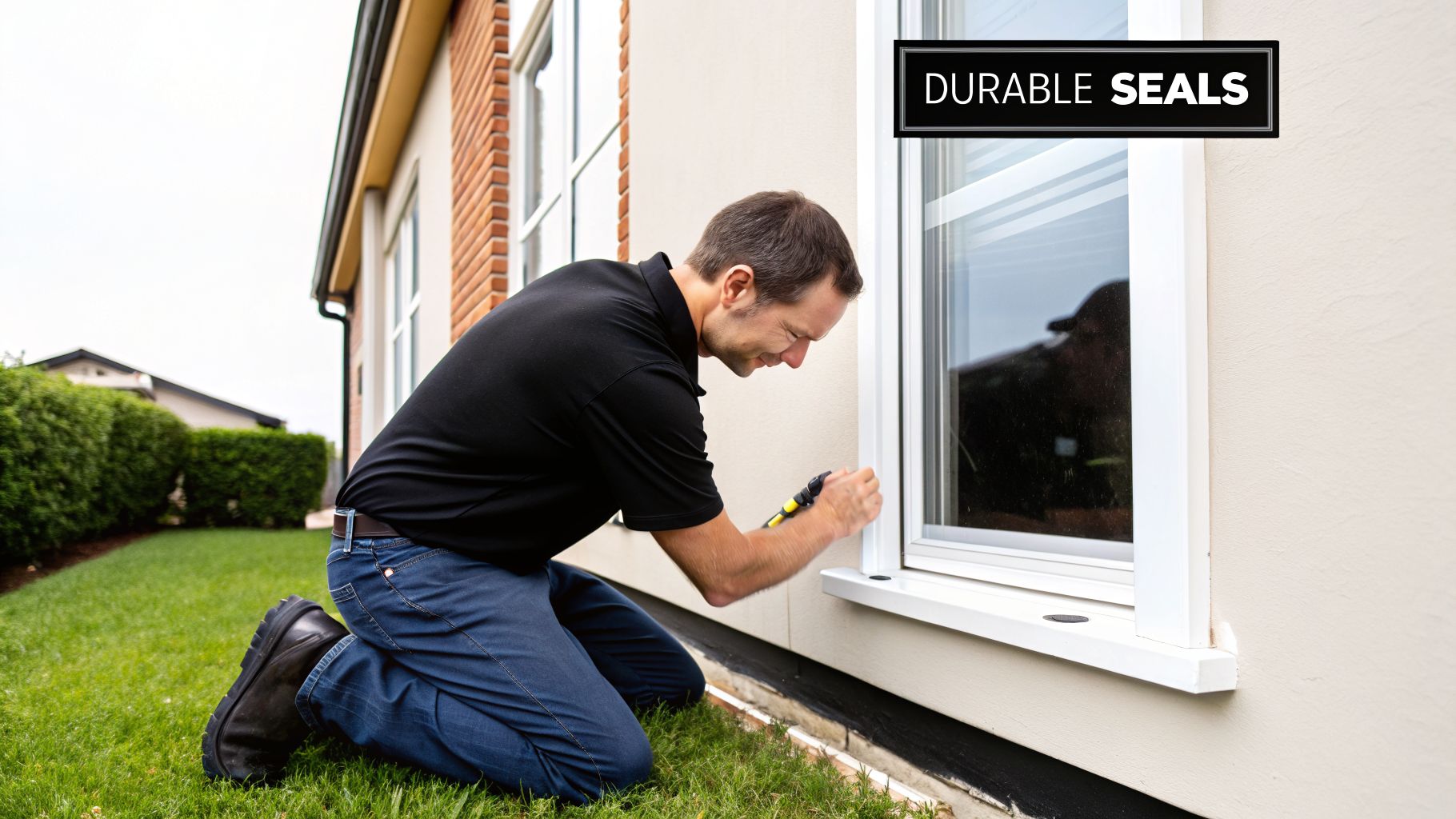
Probably the first question I get from homeowners and contractors is always the same: "Won't the argon gas just leak out?" It’s a great question. After all, what’s the point of an invisible upgrade if it disappears over time?
The truth is, while a tiny bit of gas loss is technically possible, a well-made modern window is built to keep it locked in. We're not just talking about two panes of glass stuck in a frame. Today’s insulated glass units (IGUs) feature advanced dual-seal systems that create a remarkably stable, airtight pocket for the argon.
Think of it like this: a primary inner seal acts as the main barrier to stop the gas from escaping, while a secondary outer seal provides structural integrity and keeps moisture out. This one-two punch is incredibly effective at keeping the argon right where it belongs.
Understanding the Lifespan and Leakage Rate
Reputable window manufacturers build their IGUs to last. A quality, properly installed argon-filled window is designed to lose gas at a snail's pace—typically less than 1% per year.
Let’s put that into context. Over 20 years, that window will still have more than 80% of its original argon fill. That means it keeps delivering excellent insulation and energy savings for its entire functional life.
The fear of argon gas rapidly leaking out is mostly a holdover from older, less reliable window designs. Modern manufacturing and sealing technologies have made argon-filled windows a durable, long-term investment in your home's energy efficiency.
The key takeaway is that the benefits of what is argon gas in windows aren't a temporary gimmick; they are engineered to last for decades.
For building professionals, this long-term reliability is crucial. Contractors installing windows in a commercial storefront, for instance, need seals that can last 20+ years and outperform air-filled units by 50% in preventing failures. The energy savings are just as impressive, with U.S. households saving hundreds on their yearly utility bills, which contributes to a massive reduction in national energy consumption. It’s common to see property managers in hot climates report a 10-15% drop in cooling costs after upgrading a multifamily building to argon IGUs. You can dive deeper into the market trends and impact of this technology in this detailed industry report.
How to Spot a Seal Failure
While modern seals are incredibly robust, failures can happen, though they are rare. The telltale sign isn’t something you’ll feel, but something you’ll see. When a window's seal fails, it allows moist air to creep into the space between the glass panes.
The most obvious signs of a broken seal include:
- Fog or Condensation: A persistent hazy or foggy look between the panes of glass that you can’t wipe off from the inside or outside.
- Mineral Stains: A chalky white residue or streaking left behind after trapped moisture evaporates.
If you spot either of these, it's a clear signal that the IGU seal has failed and the argon gas is gone. This is exactly why a good warranty is so important, as most quality manufacturers will cover seal failure for many years.
Making the Smart Window Choice for Your Property
So, let's pull all of this together. Argon gas isn't just some fancy add-on or a passing fad. It's a proven, reliable technology that has become the gold standard for truly energy-efficient windows. Think of it as the invisible workhorse that quietly makes your home more comfortable, chips away at your energy bills, and ultimately adds to your property's value.
For anyone who lives in a climate with distinct seasons—hot summers and chilly winters—argon-filled windows are simply a smart investment. The performance boost you get over standard air-filled windows pays you back in both everyday comfort and long-term savings. But there's a catch: this fantastic technology is only as good as its installation.
Guaranteeing Performance with Professional Installation
The insulating power of argon gas hinges entirely on the integrity of the window's seal. You can have the most advanced, highest-rated window on the market, but if it's installed poorly, it won't perform. A bad fit can put stress on the frame, break the seals, and allow that precious argon to escape, taking your energy savings with it.
This is why choosing your installer is just as critical as choosing the window itself. A professional crew knows how to set, level, and perfectly seal every single unit. That meticulous attention to detail is what preserves the airtight chamber holding the argon, ensuring you get the performance you paid for, not just for a year or two, but for decades.
When you're vetting window companies, look for one that prioritizes true craftsmanship. A supplier that uses its own trained installers—not random subcontractors—is invested in the outcome and far more likely to stand behind their work and guarantee the long-term performance of your new windows.
Here’s what you should be looking for when you make that final decision:
- Proven Expertise: Find a licensed contractor with a solid track record in your area. They'll understand the specific challenges your local climate throws at a home.
- In-House Teams: A company with its own insured installation crews has control over quality and accountability. This is a huge plus.
- Comprehensive Warranty: A strong warranty covering both the window and the installation work is your ultimate safety net. It’s also a clear sign that the company has confidence in what it sells and does.
Getting this choice right means your windows will become an asset that pays you back for years. And for those looking to get top-tier performance without the top-tier price tag, you might find amazing value by exploring surplus windows and doors.
Common Questions on Argon Windows
When you're thinking about new windows, it's totally normal to have questions about the technology you can't even see. Let's tackle some of the most common concerns about argon gas in windows so you can feel confident about your investment.
Is Argon Gas Safe for My Family and Pets?
This is often the first question people ask, and the answer is a straightforward one: argon gas is completely harmless. It's a non-toxic, colorless, and odorless gas that's already a natural part of the air we breathe, making up about 1% of the atmosphere.
Chemically speaking, argon is an inert gas. This just means it doesn't react with other substances. So, in the very rare case of a window seal breaking and the gas escaping, it poses absolutely no risk to your health or the environment. It would simply mix back into the surrounding air without you ever noticing.
Are Argon-Filled Windows Worth the Extra Cost?
For most homeowners, the answer is a definite yes. Argon-filled windows do have a slightly higher price tag than standard air-filled ones, but that initial investment usually pays for itself in just a few years through lower energy bills.
Think of it as a smart, long-term upgrade for your home's efficiency.
The value of argon-filled windows goes beyond just saving money on heating and cooling. The consistent indoor comfort, quieter rooms, and reduced condensation all add up to a much more enjoyable living space, making it a truly worthwhile improvement.
How Can I Tell If My Windows Really Have Argon?
It's a fair question—how do you confirm something invisible is actually there? You don't just have to take your installer's word for it. Reputable window manufacturers make it easy to verify.
The simplest method is to check the window's official label. In the U.S., every new window should have an NFRC (National Fenestration Rating Council) sticker on the glass or frame. This label breaks down all the energy performance details and will clearly state the gas fill, often with the word "Argon" or the symbol "Ar." A good manufacturer and installer will always provide this documentation, giving you proof that your windows are built to perform.
At Equity Building Materials, Inc., we believe in providing clear answers and high-quality products you can trust. If you're ready to upgrade your home with energy-efficient windows installed by our expert team, explore our solutions today.