
Enjoying that beautiful Central Valley view through your patio door shouldn't mean sacrificing your comfort or getting hit with sky-high energy bills. The best insulated patio door isn't just one specific product. It’s a smart combination of the right frame, advanced glass, and a professional installation that’s dialed in for your home and our local climate.
Finding the Right Insulated Patio Door
This guide is designed to cut through the jargon and help you find that perfect sweet spot between stunning looks and real-world performance. For anyone living in demanding climates like Fresno and Clovis, picking a patio door is a major decision. Our intense summer sun and chilly winter nights require a door that does more than just look pretty—it has to work hard.
We’ll dig into the key factors that make a door truly high-performance, giving you practical insights to make sure your new patio door is an investment that pays you back in comfort and energy savings.
Think of this as your foundational knowledge for making a confident choice. Getting a handle on the core components of an insulated patio door is the first step toward a more comfortable, energy-efficient home.
Key Factors for Your Decision
Before we start comparing specific products, let's talk about what actually gives a door its insulating power. These are the non-negotiables you’ll need to assess as you shop.
- Frame Material: The frame is the backbone of the door. Materials like vinyl are fantastic insulators, while others like thermally broken aluminum can give you that sleek, modern look without creating a major pathway for heat to travel.
- Glass Technology: The glass itself does a ton of heavy lifting when it comes to managing heat and light. Features such as double or triple panes, Low-E coatings, and inert gas fills all work as a team to block out the summer heat while keeping your house warm in the winter.
- Expert Installation: Honestly, even the most perfectly engineered door is a failure if it's installed poorly. Professional installation is what guarantees you get those airtight seals, perfect alignment, and long-term performance that stop drafts and energy waste in their tracks.
A truly great patio door is a complete system. Every part has to work together to deliver the comfort and efficiency you're paying for.
The best way to look at it is this: your patio door isn't a single object. It's a system where the frame, the glass, and the quality of the installation are all equally critical to getting the insulation and energy savings you want.
Making a smart decision is all about balancing these elements to match your home's needs and your budget. This guide will give you the details to compare your options like a pro.
Cracking the Code on Energy Performance Ratings
Before you can pick the right insulated patio door, you need to speak the language of energy efficiency. Every quality door is labeled with performance ratings that tell you exactly how well it will insulate your home. These aren't just marketing fluff; they are standardized metrics that let you compare different doors on a level playing field.
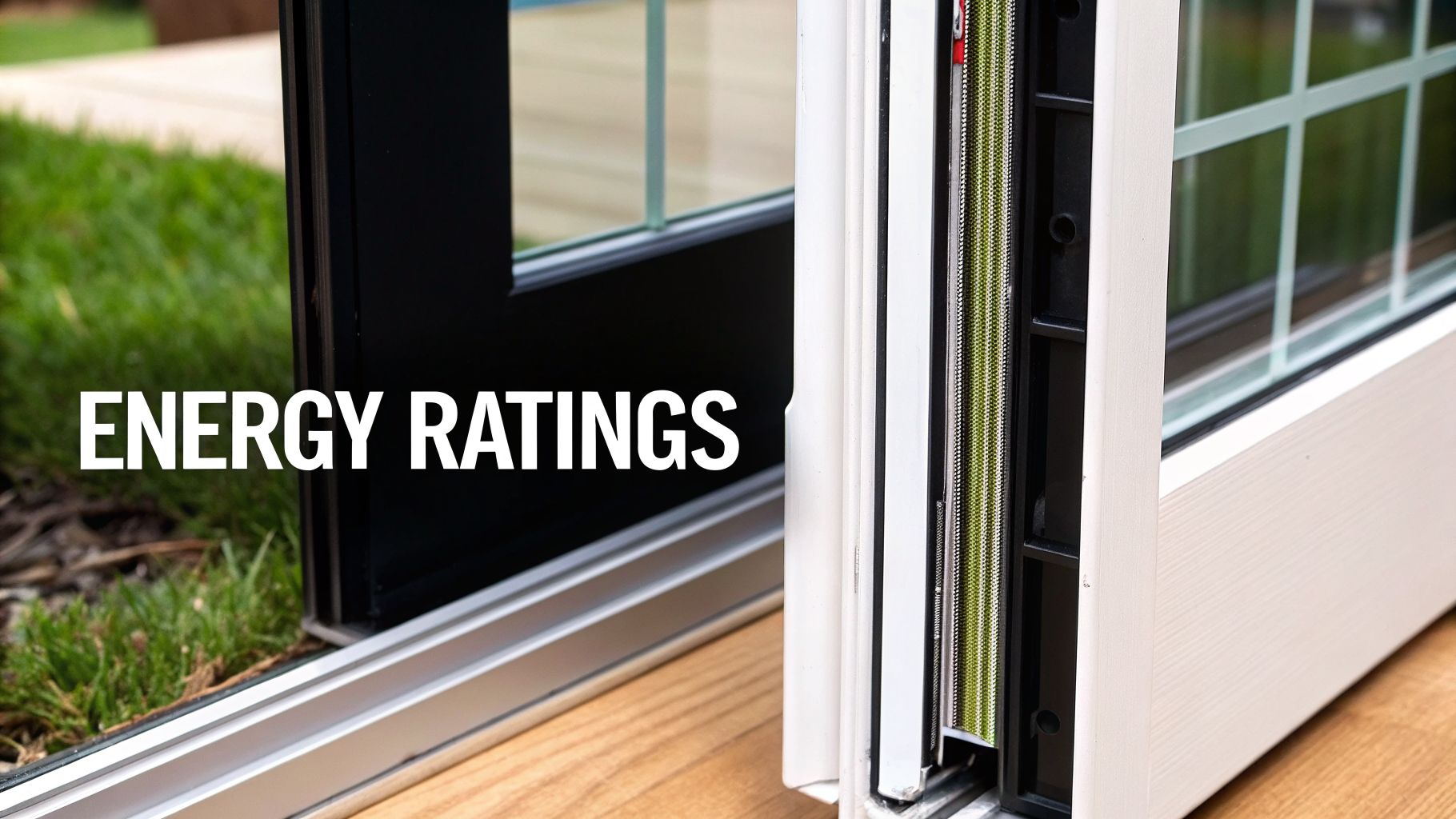
Knowing what these numbers mean is the best way to see past slick advertising and judge a door's actual performance. Let’s walk through the two most important ratings you'll come across.
What the U-Factor Really Tells You
The U-factor is the go-to number for a patio door's overall insulating power. It measures how quickly the door loses heat that isn't from direct sunlight.
Just think of it like a golf score—the lower, the better. A low U-factor means the door is a poor heat conductor, which is exactly what you want. It's excellent at keeping your heated or cooled air right where it belongs: inside your house.
For climates like the Central Valley with its chilly winter nights, a low U-factor is a must. It means your furnace doesn't have to work as hard, which shows up as real savings on your heating bills. A door with a high U-factor, on the other hand, will feel cold in the winter and constantly pull warmth out of your living space.
Why Solar Heat Gain Coefficient (SHGC) is a Big Deal Here
The Solar Heat Gain Coefficient (SHGC) measures how well a door blocks heat from direct sunlight. This rating is given as a number between 0 and 1.
A lower SHGC means less solar heat gets through the glass, which is absolutely critical for keeping your home from baking in the summer. For a climate like ours, with its long, hot, and intensely sunny summers, this is arguably the single most important metric.
If you live in Fresno or Clovis, a low SHGC is non-negotiable. It stops your patio door from acting like a massive space heater that forces your air conditioner to run constantly. A door with a high SHGC can make rooms feel uncomfortably warm and send your cooling costs through the roof.
Key Takeaway: For a Central Valley home, the perfect patio door has a low U-factor to handle our winters and an even lower SHGC to fight back against the summer sun. This one-two punch delivers year-round comfort and true energy savings.
The Tech Behind the Ratings
These performance numbers don't happen by accident. They're the direct result of some impressive engineering and materials working together to achieve those low U-factors and SHGC values.
- Multi-Pane Glass: Modern doors use double-pane (and sometimes triple-pane) glass. This creates an insulating pocket of air between the panes, which is a massive improvement over old-school single-pane glass at stopping heat transfer.
- Low-E Coatings: Low-Emissivity (or Low-E) coatings are invisible, paper-thin layers of metal oxide applied directly to the glass. These coatings are smart—they reflect the heat from infrared (IR) and UV rays but still let all the natural light stream in.
- Insulating Gas Fills: That space between the glass panes is often filled with a harmless, dense gas like argon or krypton. These gases are far better insulators than plain air, slowing down heat movement even more.
This technology makes a huge difference. Windows and doors can be responsible for about 25% of a home's heating and cooling energy use. But the best insulated patio doors—with their double- or triple-pane glass, Low-E coatings, and gas fills—can flip that script. The average homeowner can save around $300 a year, a figure supported by US Department of Energy insights and countless real-world projects. You can dive deeper into the data on energy-saving doors over at GBD Magazine.
By getting a handle on these ratings and the technology driving them, you’re ready to make a choice based on real performance and long-term value for your home.
Comparing Frame Materials for Insulation and Durability
The frame is the structural backbone of your patio door. The material you choose has a direct, hands-on impact on its insulating power, how long it will last, and how much work it takes to maintain. Think about it: a frame that can't handle the intense heat of a Central Valley summer will warp, compromising its seals and letting your expensive cool air escape. This is a make-or-break decision.
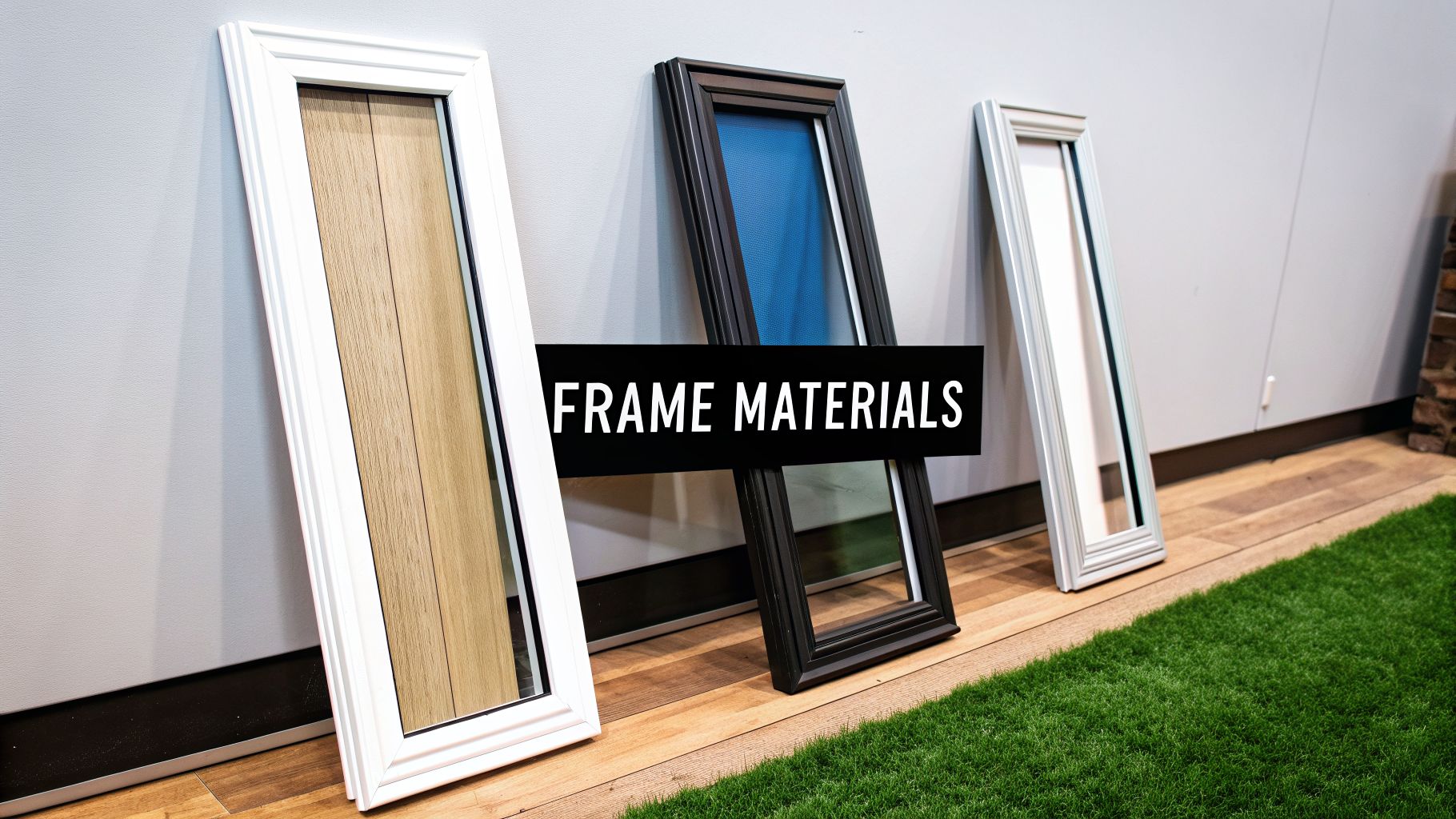
Let's dive into a real-world comparison of the top contenders: vinyl, fiberglass, and thermally broken aluminum. We'll look at each one through the lens of a local homeowner, evaluating how it performs during our region's extreme temperature swings. This isn't just a list of features; it's the context you need to pick the right frame for your home, budget, and performance goals.
Vinyl: The Unbeatable Value and Thermal Champion
There's a good reason modern vinyl is the most popular choice for patio door frames around here. It's a fantastic natural insulator, which simply means it’s great at resisting heat transfer. The real magic happens inside the frame, where multiple internal chambers create dead air pockets that act as an extra buffer against the heat.
This multi-chambered design is vinyl's secret weapon. It dramatically slows down the process of outdoor heat radiating into your home, helping you keep a comfortable temperature inside without your air conditioner working overtime. Right out of the gate, this inherent efficiency makes vinyl an outstanding foundation for a highly insulated patio door.
For homeowners focused on getting the most insulation for their money, a well-built vinyl frame is nearly impossible to beat. Its thermal performance is top-tier and directly translates to lower energy bills.
Beyond just insulation, today’s high-quality vinyl is built for a climate like Fresno's. It's packed with stabilizers that resist fading and breaking down under our harsh UV rays. It also won't rot, rust, or corrode, and you’ll never have to paint or stain it. It’s a genuinely low-maintenance option for busy families. This combination of performance and practicality makes vinyl a clear leader, and you can see how these same benefits apply to windows in our guide to high-quality vinyl window options.
Fiberglass: The King of Strength and Stability
Fiberglass is another exceptional insulator, made from fine strands of glass woven together and saturated with resin. It offers thermal performance right up there with vinyl but truly shines in one key area: dimensional stability. What that means is fiberglass expands and contracts at a minimal rate—almost the same as glass itself.
This stability is a massive advantage in a climate with our dramatic temperature swings. When the afternoon sun beats down on a dark-colored frame, some materials can expand and bow, putting a strain on the door's seals. Fiberglass frames, however, hold their shape remarkably well, ensuring a tight, consistent seal year after year.
This makes fiberglass an ideal choice for:
- Large patio doors: The bigger the door, the more structural rigidity matters.
- Dark-colored frames: Dark colors absorb more heat, and fiberglass handles that thermal stress without warping.
- Long-term durability: Its resistance to dents, scratches, and warping makes it a true workhorse built for the long haul.
While fiberglass typically comes with a higher price tag than vinyl, it offers a compelling package if your top priorities are ultimate strength and long-term, worry-free performance. The fact that you can paint it also gives you more design flexibility down the road.
Thermally Broken Aluminum: The Modern and Sleek Choice
Let’s be clear: standard aluminum is a great structural material but a terrible insulator; it conducts heat like a frying pan. This is where the "thermally broken" part becomes absolutely critical. A thermally broken aluminum frame has a non-conductive polyurethane strip that physically separates the interior and exterior aluminum pieces.
This thermal break acts as a roadblock, disrupting the flow of heat right through the frame. Without it, an aluminum frame would become a superhighway for summer heat and winter cold, completely undoing the benefits of even the best glass package.
The main reason people choose thermally broken aluminum is aesthetics. It delivers:
- Slimmer frames and larger glass areas: Aluminum’s strength means you need less frame to support the glass.
- Clean, modern lines: It gives you that sharp, contemporary look that is so popular right now.
- Excellent durability: It's incredibly strong and won't rust or rot.
Even with the thermal break, an aluminum frame generally won't match the insulating power of a top-tier vinyl or fiberglass frame. It's a choice for people who are in love with the modern look and are willing to make a slight trade-off in absolute thermal performance. For a specific design goal, it's an excellent, high-performance option.
Patio Door Frame Material Performance Comparison
To make things even clearer, here's a side-by-side look at how these materials stack up against each other based on what matters most for a Central Valley home.
| Feature | Vinyl | Fiberglass | Thermally Broken Aluminum |
|---|---|---|---|
| Insulation (U-Factor) | Excellent (multi-chamber design) | Very Good (natural insulator) | Good (relies heavily on thermal break) |
| Heat Resistance (Warping) | Good (modern formulas have UV inhibitors) | Excellent (minimal expansion/contraction) | Excellent (structurally rigid) |
| Strength & Durability | Very Good (welded corners) | Excellent (resists dents, scratches) | Excellent (strongest material) |
| Maintenance | Lowest (no painting needed) | Low (can be painted if desired) | Low (durable finish) |
| Cost | $ (Most affordable) | $$$ (Premium price point) | $$ (Mid-to-high range) |
| Aesthetics | Traditional look, limited colors | Can mimic wood, paintable | Modern, slim lines, contemporary feel |
| Best For | Budget-conscious energy efficiency | Large doors, dark colors, ultimate longevity | Modern design, maximizing glass view |
This table helps illustrate the trade-offs. While vinyl often provides the best balance of insulation and cost, fiberglass offers unmatched stability, and thermally broken aluminum delivers a unique modern aesthetic. Your choice depends on which of these benefits you value most for your home.
Calculating the Real Return on Your Investment
A high-performance insulated patio door is more than just a home improvement project; it's an investment. I get it, the technical specs and frame materials are important, but the real question for most homeowners is, "What's the payoff?" Let's translate those features into the real-world financial and lifestyle benefits you can expect.
Switching from an old, single-pane door to a modern, energy-efficient model makes a direct impact on your monthly heating and cooling costs. We'll look at the data to show you how to figure out the savings and payback period for this smart home upgrade.
From Monthly Costs to Real Savings
The first and most immediate return you'll see is a noticeable drop in your utility bills. Outdated, inefficient doors—especially the single-pane aluminum models common in older Central Valley homes—are massive energy drains. They basically act like thermal holes, letting all your expensive cooled air escape in the summer and welcoming cold drafts in the winter.
Upgrading plugs that energy leak for good. A truly energy-efficient sliding glass door can slash your heating and cooling expenses by 20-35% compared to an old single-pane model. That translates into real savings of $150 to $400 per door annually, putting money back in your pocket every single month. As detailed in a great breakdown on how these doors lower your bills, the top performers hitting these numbers have U-factors of 0.30 or lower and SHGC values optimized for our California climate.
Estimating Your Payback Period
Calculating the payback period helps you see exactly when your investment has officially paid for itself through energy savings. While the timeline depends on your specific home, you can easily create a simple estimate.
1. Determine the Total Project Cost: This includes the price of the door itself plus professional installation. Let’s assume a total cost of $3,500 for a high-quality vinyl sliding door.
2. Estimate Your Annual Energy Savings: Based on the data, let's use a conservative estimate of $250 in annual savings on heating and cooling.
3. Calculate the Payback Period:
Total Cost ($3,500) ÷ Annual Savings ($250) = 14 Years
A 14-year payback might seem long, but that calculation doesn't tell the whole story. It only looks at direct energy savings and ignores other significant financial benefits. It also makes the unlikely assumption that energy prices will stay the same.
The Hidden Financial Gains
Beyond your monthly utility bills, a new insulated patio door adds value in other important ways that actually speed up your return on investment.
- Increased Property Value: A new, energy-efficient patio door is a major selling point. It tells potential buyers that the home is well-maintained and updated, which boosts curb appeal and overall marketability. This upgrade can directly contribute to a higher appraisal and final sale price.
- Reduced Maintenance Costs: If you're upgrading from a wood door that needs constant painting or an old aluminum one with failing parts, you’re eliminating those recurring maintenance costs and headaches. High-quality vinyl or fiberglass frames are virtually maintenance-free, saving you both time and money for years.
- Access to Value-Priced Options: You don't always have to buy a brand-new, custom-ordered product to get great performance. Exploring options like high-quality surplus windows and doors can significantly lower your initial investment, dramatically shortening the payback period while still delivering excellent insulation.
An insulated patio door is a multifaceted financial decision. While energy savings are the most visible return, the combined impact on property value, reduced maintenance, and improved lifestyle offers a much faster and more substantial ROI than energy savings alone suggest.
When you factor in these extra benefits, the initial cost is more than justified. You aren't just buying a door; you're investing in your home's long-term financial health, efficiency, and comfort.
Why Professional Installation Is Non-Negotiable
You can spend a fortune on the best-insulated patio door on the market—one with a best-in-class U-factor and SHGC—but its real-world performance is only as good as its installation. An insulated door isn't just a slab of glass and vinyl; it's a complete system that has to integrate perfectly with your home's structure. Even a tiny gap or a slightly misaligned frame can completely undermine all the advanced technology you paid for.
Poor installation is the fastest way to turn a high-performance door into an expensive, drafty disappointment. It creates air leaks, allows moisture to creep into your walls, and often makes the door a pain to open and close. Think of professional installation as the final, critical step to ensuring you actually get the comfort, energy savings, and durability you expect.
The Anatomy of a Flawless Installation
A true professional does far more than just slide a door into an opening and call it a day. The process is a genuine craft, blending precision carpentry with a deep understanding of building science to protect your home and guarantee the door’s performance for decades.
This meticulous process involves several key steps:
- Proper Flashing: This is your home’s number one defense against water intrusion. A pro installer creates a multi-layered barrier with specialized tapes and metal flashing, meticulously designed to channel water away from the opening. Without this, rain can easily find its way into your walls, setting the stage for rot and mold.
- Meticulous Air Sealing: To stop drafts cold, installers use low-expansion foam and high-grade sealants to create a continuous, airtight barrier between the door frame and the wall. This is what stops your expensive conditioned air from leaking out and the Central Valley heat from seeping in.
- Precise Adjustments: A pro will ensure the door is perfectly plumb, level, and square. This painstaking attention to detail guarantees the door glides effortlessly and the weatherstripping makes full, even contact for a tight seal every time you close it.
The Real Risks of a DIY or Poor Installation
Trying to install a patio door yourself or hiring an unqualified handyman can lead to some seriously costly problems—ones that go way beyond a simple draft. The financial and structural risks are very real.
A poorly installed door doesn't just fail to perform—it can actively cause damage to your home. Compromised insulation, structural rot from water intrusion, and a voided manufacturer warranty are the real costs of cutting corners on installation.
Just consider the potential consequences:
- Compromised Insulation: Tiny, unsealed gaps around the frame can account for massive energy loss, forcing your HVAC system to work overtime and driving up your utility bills.
- Structural Damage: Improper flashing is one of the most common causes of water damage inside walls. The repairs for mold and wood rot can easily run into the thousands, dwarfing any initial savings from a cheap installation.
- Voided Warranties: Most door manufacturers will not honor their warranty if the product wasn't installed according to their specific guidelines. Professional installation is your insurance policy.
Ultimately, choosing one of the best insulated patio doors is only half the battle. To get the full performance and peace of mind you’re paying for, you have to entrust that investment to a team that guarantees its craftsmanship. And if you're thinking about a front door upgrade, the same principles apply. You can learn more in our guide to secure and stylish entry doors.
Making the Final Decision for Your Home
Choosing the right insulated patio door really comes down to what matters most to you. Are you laser-focused on cutting your energy bills? Or is getting a specific architectural look the top priority? Maybe you just need something that will stand up to the intense Central Valley sun for years to come. The best choice always lies in finding that sweet spot between performance, your budget, and how you live.
This means looking back at the key metrics we’ve discussed. You’ll want to start with the ENERGY STAR ratings for our specific climate zone. That means prioritizing a low U-factor to keep your home warm in the winter and an even lower SHGC to block out that summer heat. Getting this right ensures your door is working for you all year long, not against you.
Balancing Material, Glass, and Budget
From there, it's time to weigh the frame materials. Vinyl is a fantastic all-around choice, offering a great blend of insulation and affordability that’s hard to beat. If you need maximum strength and stability—especially for oversized doors or dark-colored frames that absorb more heat—fiberglass is the premium option. For those seeking sleek, modern lines, thermally broken aluminum delivers the look without sacrificing performance.
Once you’ve settled on a frame, you’ll pair it with the right glass package. Today, the standard for excellent efficiency is double-pane glass featuring a high-performance Low-E coating and argon gas fill. These components work together as a complete system, delivering noticeable comfort and real savings on your utility bills.
Your final decision is a strategic trade-off. A top-tier fiberglass door offers ultimate longevity, but a premium vinyl door might provide nearly identical energy savings for a lower initial investment, freeing up budget for other home projects.
Thankfully, the growing demand for better insulation is driving the industry to innovate. The global patio doors market is projected to expand significantly, fueled by advances in energy-efficient glazing and frames designed to meet tougher building codes. You can dig deeper into these trends in this global patio doors business report. For homeowners like you, this trend is great news—it means high-performance doors are more accessible and affordable than ever.
The Final Step: Installation
Your last, and most critical, decision is how to get the door installed. You can tackle it yourself or hire a professional, and this flowchart lays out the stakes pretty clearly.
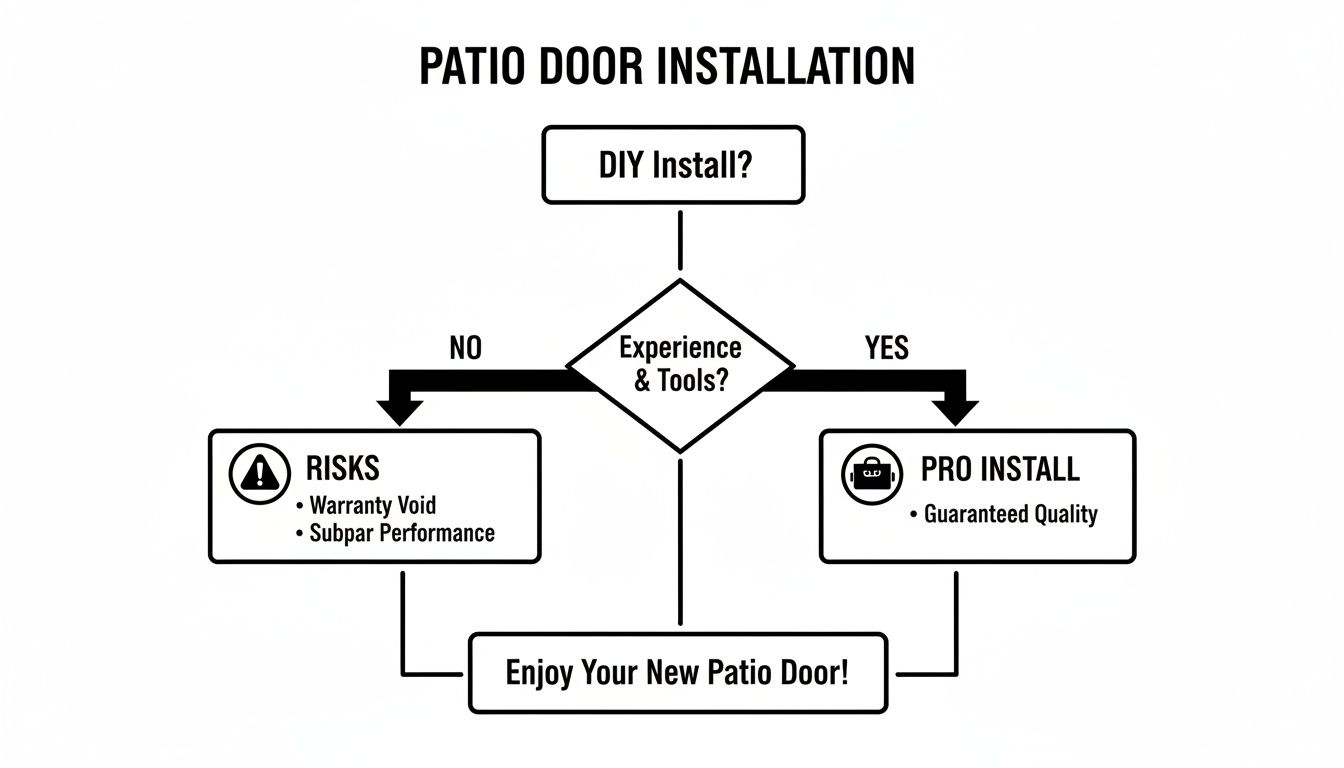
As you can see, a DIY project might look like it saves money upfront, but it comes with some serious risks that can cost you down the road. Professional installation is what protects your investment and guarantees performance. When you partner with an expert installer like Equity Building Materials, you get the peace of mind that the perfect door will be installed flawlessly. This final step is what turns a good product into a great, long-lasting improvement for your home.
Your Top Questions Answered
Choosing the right patio door can feel overwhelming with all the technical specs and options. Let's break down some of the most common questions homeowners in the Central Valley ask when they're looking to upgrade.
What U-Factor and SHGC should I look for in the Central Valley?
For a climate like ours—blazing hot summers and pretty mild winters—you need a specific combination. Aim for a U-Factor of 0.30 or lower and an SHGC of 0.25 or lower.
Think of it this way: the low U-Factor is your winter shield, keeping your heated air inside where it belongs. But that very low SHGC is the real hero in summer, blocking the sun's intense heat from ever getting in and driving up your air conditioning bill. It's the key to year-round comfort.
Are Vinyl Patio Doors really a good long-term investment?
Yes, they absolutely are. High-quality, modern vinyl isn't the flimsy stuff from decades past. It’s engineered to be incredibly durable, resisting the warping, cracking, and fading that our intense sun can cause.
A well-built vinyl patio door delivers one of the best long-term values you can find. Its multi-chambered frame provides fantastic insulation, and the material itself is virtually maintenance-free.
That combination of built-in efficiency and tough resilience makes it a smart, reliable investment for any home in our region.
How much does professional installation add to the cost?
The final price for professional installation can vary. It depends on factors like the size of the door, the state of the existing opening, and if any structural tweaks are needed to get a perfect fit.
It's tempting to see installation as a place to save money, but it’s actually a direct investment in the door's performance and lifespan. Professional installation is the only way to ensure you get a perfect air seal, smooth operation, and total weatherproofing. Skipping it can lead to frustrating drafts, energy loss, and expensive repairs down the road.
What’s the difference between a New-Construction and a Replacement Door?
The main distinction is in how the door is attached to your house. It all comes down to the frame.
- New-Construction Doors: These come with a nailing fin or flange. This flange is attached directly to the house's sheathing, making it ideal for new builds or major remodels where the exterior siding is being removed anyway.
- Replacement Doors: Often called "retrofit" doors, these are designed to slide neatly into your existing door frame. This process minimizes disruption to your walls and siding, making it the go-to choice for straightforward home upgrades.
Ready to upgrade to a high-performance patio door with a flawless installation? The experts at Equity Building Materials have been serving the Central Valley for over 30 years with an in-house team of trained professionals. Explore our energy-efficient options and get your free estimate today.
Written with the Outrank tool