
When you start looking for the best patio door brands, a few names keep coming up for good reason. You’ll often find yourself comparing Anlin for its unbeatable vinyl, Milgard for its sheer variety of materials, and Pella for its classic wood and high-end fiberglass. The truth is, there's no single "best" brand for everyone. The right choice really comes down to what matters most to you: your budget, how much you want to save on energy bills, and the look you're going for.
Your Guide to Choosing the Right Patio Door Brand
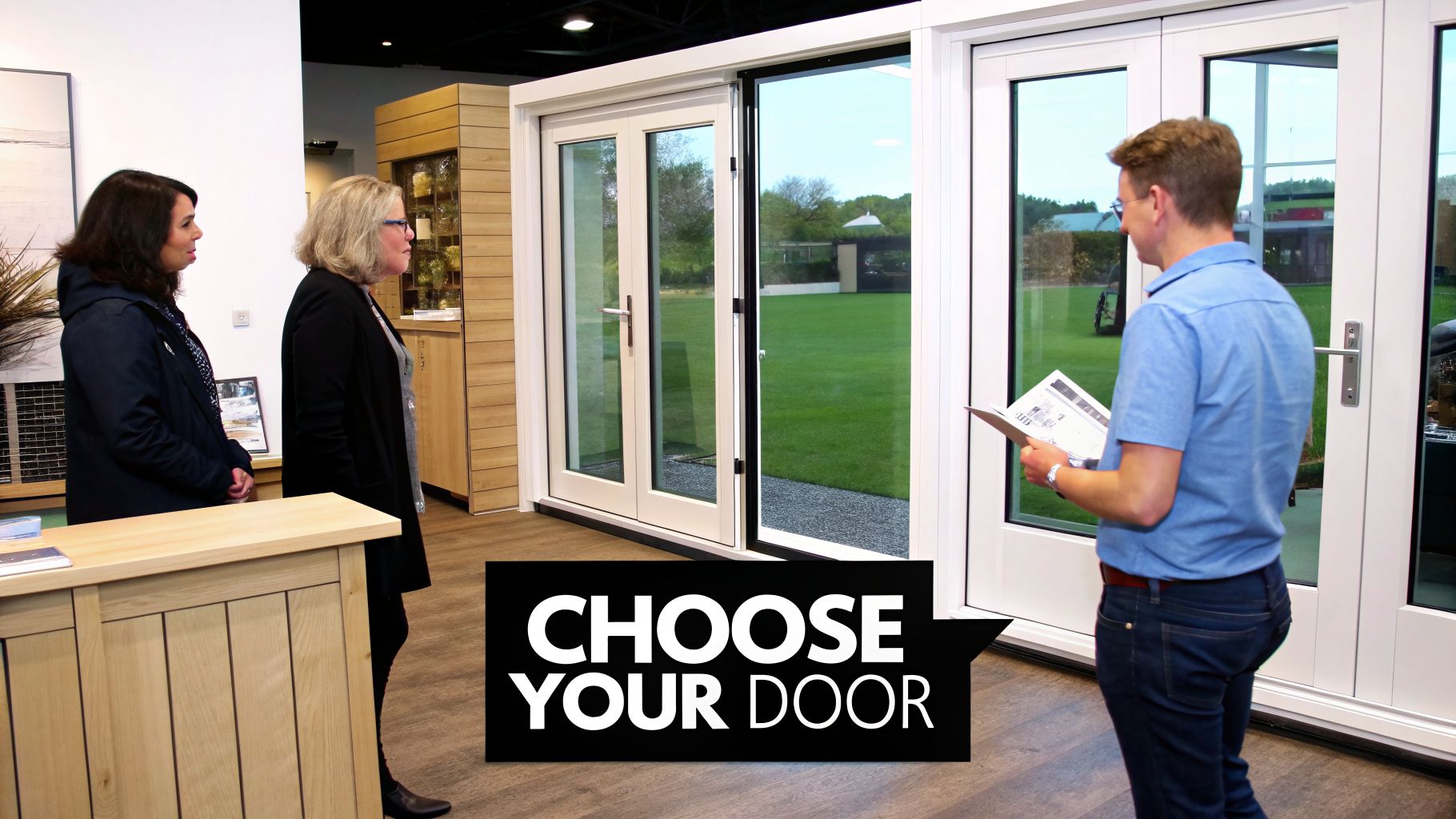
Picking a new patio door is a big decision. It’s an investment that changes how your home looks and feels, and it can even affect your monthly energy costs. This is especially true in places like the Central Valley, where intense summer heat and changing temperatures put any door to the test. With so many brands, materials, and styles out there, it's easy to feel overwhelmed.
This guide is here to cut through the noise. We’ll help you move from feeling uncertain to making a confident choice by showing you what really makes the top patio door brands different. We're not just going to list features; we’ll give you practical advice based on our 30+ years of experience in the field, so you can pick a door that will stand up to the elements for years to come.
Understanding the Top Contenders
While the market is flooded with options, a handful of brands consistently stand out for their quality and performance. To get you started, let's look at the core strengths of the top brands we work with at Equity Building Materials.
This quick overview will give you a feel for each brand's main focus:
- Anlin: This brand is all about high-performance vinyl. Their doors are engineered for incredible energy efficiency and durability, which makes them a fantastic choice for areas with extreme weather.
- Milgard: Known for its wide range of products, Milgard offers solid options in vinyl, fiberglass, and aluminum. They have something to fit almost any home style or budget.
- Pella: Pella is a household name, famous for its beautiful wood doors. They've also become a strong competitor in fiberglass and vinyl, often with a focus on innovative design features.
Your ideal brand hinges on your specific needs. Are you prioritizing maximum energy savings to lower your utility bills, or is the timeless look of wood the most important factor for your home’s design? Answering this question is the first step.
To help you start sorting through your choices, the table below provides a high-level overview of the leading brands. It breaks down each one's primary material and what type of project or homeowner they’re best for. Think of this as your starting point before we dive deeper into the details.
At a Glance Comparison of Top Patio Door Brands
A high-level overview of leading patio door brands, their primary material focus, and ideal use cases to help you narrow down your options.
| Brand | Primary Material | Best For | Key Feature |
|---|---|---|---|
| Anlin | Vinyl | Homeowners seeking maximum energy efficiency and a robust lifetime warranty in harsh climates. | Platinum Elite™ glass package for superior thermal performance. |
| Milgard | Fiberglass & Vinyl | Those wanting a balance of quality, material options, and reliable performance from a well-known brand. | Patented SmartTouch® handle for easy, secure operation. |
| Pella | Wood & Fiberglass | Homeowners prioritizing traditional aesthetics, design flexibility, and innovative features. | Integrated blinds or shades between the glass for convenience. |
| Andersen | Composite & Wood | Buyers looking for durability and a wide range of styles from one of the industry's largest manufacturers. | Proprietary Fibrex® material that resists fading and rot. |
This snapshot gives you a good sense of where each brand fits in the market. Now, let’s get into a more detailed comparison of what sets them apart.
Getting to Know Your Patio Door Materials and Styles
Picking the right patio door gets a whole lot easier once you grasp the two fundamental choices you’ll need to make: the frame material and the door's operating style. These decisions will shape everything—from durability and maintenance to energy efficiency and how you move between your indoor and outdoor spaces. A door that works perfectly in a mild coastal climate, for instance, might not hold up to the intense sun and temperature swings we see here in the Central Valley.
Let’s dig into the practical differences between the most common materials. Think of each one as having its own distinct personality, with unique strengths that match different homeowner priorities.
Comparing Patio Door Materials
The frame is the backbone of your patio door. It dictates how well it insulates, how much upkeep it will need, and whether it will stand strong for years to come.
Vinyl Patio Doors
There’s a reason high-quality vinyl is so popular. It’s a fantastic insulator, which means it plays a direct role in keeping your home comfortable and your energy bills in check. Modern vinyl isn't what it used to be; it's engineered to be incredibly tough, resisting peeling, cracking, and fading even after years of direct sun exposure.
Best of all, this material is virtually maintenance-free—a simple cleaning now and then is all it takes. If you’re looking for a "set it and forget it" solution that still delivers on energy performance, vinyl is tough to beat. Many homeowners who start by researching replacement windows discover that vinyl's benefits translate perfectly to patio doors.
Fiberglass Patio Doors
Fiberglass is all about strength and stability. It barely expands or contracts with temperature changes, which is a huge deal. It means your door's seals stay tight all year long, preventing annoying drafts and energy loss. Plus, you get design flexibility—fiberglass can have a modern smooth finish or a surprisingly realistic wood-grain texture.
Fiberglass truly shines in its resilience. Because it’s so dimensionally stable, it’s the go-to choice for doors painted in dark colors, especially those facing the brutal afternoon sun. It simply won't warp like other materials can.
Wood Patio Doors
Nothing quite matches the timeless, classic beauty of real wood. It brings a natural warmth and elegance that other materials can only try to imitate, giving your home a rich, high-end feel. While wood is a good natural insulator, it does demand the most maintenance.
To keep it safe from moisture, rot, and pests, a wood door needs to be painted or stained on a regular basis. That's why many of today's wood doors feature an aluminum or vinyl-clad exterior—you get the low-maintenance exterior while keeping that beautiful wood look inside. A wood door is a statement piece, perfect for those who value traditional aesthetics and are ready for the upkeep involved.
Choosing Your Patio Door Operating Style
Once you've settled on a material, the next question is: how will it open? The right style depends on your room's layout, how you envision using the space, and your home’s overall design.
Sliding Patio Doors
This is the ultimate space-saver. Sliding doors glide on a track, meaning they don't swing out and take up valuable floor space inside your room or on your patio. This makes them a perfect fit for tighter spots or high-traffic areas. They also offer a wide, uninterrupted pane of glass that floods the room with natural light and provides a great view.
French Patio Doors
Consisting of two doors that swing open from the middle, French doors create a grand, dramatic entrance. The feel is more traditional and elegant. Because they open completely, they offer a wide, clear pathway to your outdoor area, which is fantastic for connecting a living room to a deck for parties. Just remember, you'll need to leave enough clearance for the doors to swing open, both indoors and out.
Folding or Bifold Patio Doors
If you're dreaming of that seamless indoor-outdoor lifestyle, nothing beats a folding door. These systems use a series of panels that fold up like an accordion, allowing you to open up an entire wall to your patio or backyard. They can completely transform a space, blurring the line between your great room and your garden. While they are a bigger investment, the breathtaking effect and expansive opening are what make them so popular.
A Detailed Comparison of Leading Patio Door Brands
Let's move past the brochure summaries and get into a real head-to-head analysis of the best patio door brands. Instead of just listing features, we're going to compare Anlin, Milgard, Pella, and Andersen on the things that actually matter for long-term satisfaction: energy performance, warranty, customization, and durability. This is where you’ll see exactly where each brand shines.
This kind of focused comparison reveals the subtle but critical differences, like how Anlin’s specialized vinyl technology stacks up against Andersen's proprietary Fibrex® composite.
Energy Performance and Climate Suitability
When you're dealing with demanding weather, a door's ability to insulate is non-negotiable. The top brands invest heavily in technology to keep your home comfortable and your energy bills from creeping up.
Anlin's Thermal Superiority
Anlin is laser-focused on creating high-performance vinyl specifically for western climates. Their doors are built with advanced glass packages like the Platinum Elite™, which combines multi-layer Low-E coatings, argon gas fill, and top-tier warm-edge spacers. This whole system is engineered to block the sun's heat while keeping your conditioned air right where it belongs.
For a homeowner in the Central Valley facing brutal summer afternoons, an Anlin door is like a thermal shield. The difference is something you can feel—rooms stay cooler, and your AC unit gets a much-needed break.
Milgard and Andersen's Versatile Solutions
Milgard gives you a broader range of materials, each with its own energy story. Their Tuscany® Series vinyl doors are fantastic performers, but their Ultra™ Series fiberglass doors offer exceptional stability and insulation, especially when you upgrade to their best glass packages.
Andersen takes a unique path, centering on their exclusive Fibrex® material. It’s a composite made of 40% reclaimed wood fiber and 60% thermoplastic polymer that blocks thermal transfer almost as well as vinyl but with the strength and rigidity of wood. It strikes a great balance between energy smarts and pure brawn.
Pella's Wood and Fiberglass Focus
Pella's wood doors have come a long way and now offer impressive energy efficiency thanks to multi-pane glass and advanced weatherstripping. For extreme heat, however, their Impervia® fiberglass series is often the more practical choice because it resists warping and maintains a tight seal far better than many other materials.
This infographic breaks down the core strengths of the main materials these brands are known for.
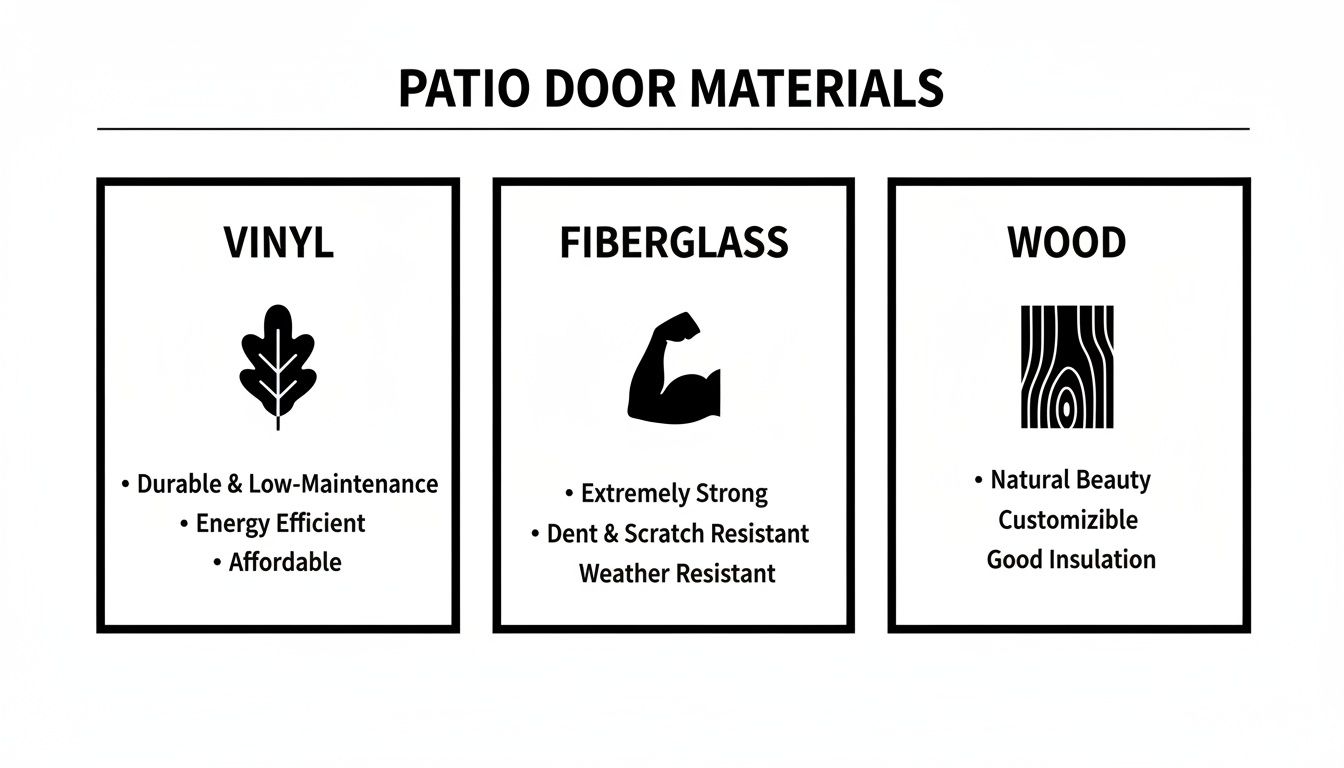
As you can see, vinyl is a champ for efficiency, fiberglass wins on strength, and wood delivers natural beauty. This helps point you toward the brand whose specialty aligns with what you value most.
Warranty Strength and Long-Term Value
A warranty isn't just a piece of paper. It’s a manufacturer's promise of quality and a clear signal of how much confidence they have in their own product.
Anlin's True Double Lifetime Warranty
This is where Anlin really sets the industry benchmark. Their "True Double Lifetime Warranty" covers parts, labor, and even shipping for as long as you own your home. What’s truly remarkable is that if you sell, the entire warranty transfers to the next owner, making it a powerful selling point.
That level of coverage is almost unheard of and provides genuine peace of mind. It even covers accidental glass breakage—a benefit you’ll rarely find with other brands.
Comparing Other Major Warranties
Milgard also offers a strong Full Lifetime Warranty on most of their product lines. It's transferable, but the terms for the second owner might be different. Pella and Andersen provide solid but often more complicated warranties. Their coverage can change a lot depending on the product line (e.g., wood vs. vinyl) and often breaks down coverage for the frame, glass, and hardware into different timeframes. With these brands, you absolutely have to read the fine print to know what’s covered and for how long.
If you're looking to maximize your investment, a straightforward, all-inclusive warranty like Anlin’s can easily be the deciding factor.
Customization and Aesthetic Potential
Your patio door is a huge part of your home's design, and the best brands offer plenty of options to match your personal style.
Pella The Design Leader
Pella has staked its reputation on aesthetics. They are especially known for their wood doors, offering a huge menu of wood species, stain finishes, and hardware. One of their most popular features is the optional between-the-glass blinds or shades—a genius touch that gives you privacy and light control without ever collecting dust.
Andersen and Milgard's Broad Offerings
Andersen has a massive catalog of styles, colors, and grille patterns across its 100, 200, 400, and E-Series lines. The A-Series, designed with input from architects, is aimed at high-end custom homes, while the 100 Series provides a more affordable way to get their composite material.
Milgard also delivers extensive options, particularly with their Style Line® and Tuscany® vinyl series. These come in multiple colors and can even have a different color on the interior and exterior, letting you match your outdoor trim while keeping a clean white look inside. If a specific style catches your eye but your budget is tight, you might get lucky by checking out surplus windows and doors, which can include high-quality models from top manufacturers at a great price.
Anlin's Focused Approach
While Anlin is a performance leader, it offers a more curated selection of styles and colors. Their goal is to perfect the most popular and timeless vinyl door designs. You won’t find the sheer volume of niche choices that Pella offers, but Anlin delivers beautiful, classic options that fit the vast majority of home styles. They’ve made a clear choice to never compromise quality for quantity.
Decoding Energy Ratings and Warranty Protections
All those technical specs on a patio door label can feel a bit overwhelming. But once you know what they mean, you've found the key to long-term comfort and value. The numbers on a National Fenestration Rating Council (NFRC) label aren't just for show—they directly translate into a cooler home and lower energy bills, a huge deal for anyone living in the Central Valley.
Think of these ratings as a clear, unbiased guide to how a door will actually perform in your home. For homeowners, this data is the single most reliable tool for comparing different models from the best patio door brands.
Understanding Key Energy Metrics
When you look at an NFRC sticker, two numbers really matter for our climate: the U-Factor and the Solar Heat Gain Coefficient (SHGC).
U-Factor
This number tells you how well the door keeps heat from escaping. It’s essentially an insulation rating, usually on a scale from 0.20 to 1.20. It’s simple: the lower the U-Factor, the better the door insulates. A low U-Factor is your best friend in the winter, keeping all that expensive warm air right where you want it—inside.
Solar Heat Gain Coefficient (SHGC)
The SHGC measures how well a door blocks the sun's heat from getting into your house. The value is a number between 0 and 1. In a hot climate, a lower SHGC is critical. It means less solar heat penetrates the glass, which helps keep your home cooler and gives your air conditioner a much-needed break.
For homes in the Central Valley, the strategy is simple: prioritize a low SHGC to combat the intense summer heat. A good U-Factor is a nice bonus for year-round temperature stability, but blocking solar heat is the main event.
Making Sense of Patio Door Warranties
A solid warranty is a manufacturer's vote of confidence in its own product. But let's be honest, not all warranties are created equal. Phrases like "limited lifetime" can sound great but often hide crucial exceptions in the fine print. Digging into the details is the only way to truly protect your investment.
The demand for high-quality doors is on the rise as homeowners seek better performance and durability. To give you an idea, the sliding patio glass door market was valued at a staggering $1.7 billion in 2023. Projections show it could climb to $2.5 billion by 2035, all thanks to the push for more natural light and better energy efficiency. You can read more about these sliding door market trends in this detailed report. As this market grows, understanding your warranty becomes more important than ever.
What to Look for in a Warranty
A truly great warranty is both comprehensive and transparent. When you’re comparing the best patio door brands, look for separate coverage on the different parts of the door.
- Glass Coverage: Does it cover seal failure? That's what causes that foggy look between the panes. Some top-tier warranties, like the one from Anlin, even cover accidental glass breakage.
- Frame and Hardware Coverage: The frame, locks, rollers, and handles should all be protected from defects. Pay close attention to the duration—some brands offer a lifetime warranty on the frame but only a few years on the moving parts that see the most wear and tear.
- Labor and Transferability: Will the manufacturer cover the labor cost for a repair, or just ship you a new part? Also, check if the warranty is transferable to the next homeowner. That can be a real selling point down the road.
A "limited lifetime" warranty often means the coverage decreases over time (pro-rated) or excludes certain components altogether. A brand offering a clear, non-prorated, and transferable warranty is showing you they stand behind their product for the long haul. Just remember, this protection is only valid if the door is installed correctly. Always use manufacturer-certified professionals to ensure your warranty holds up.
Why Professional Patio Door Installation Matters
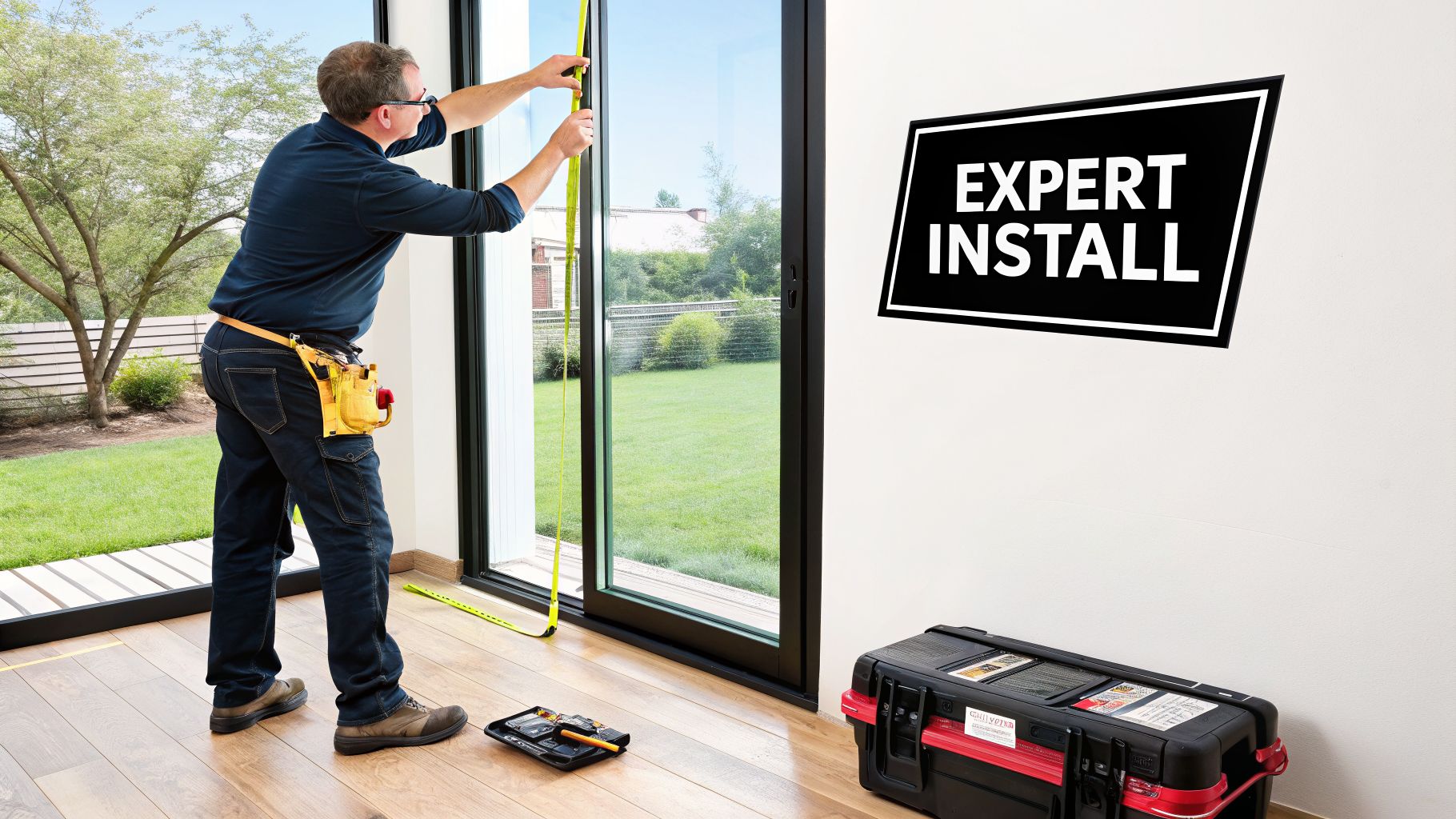
You can spend weeks poring over brochures and comparing features from the best patio door brands. But if the installation isn't perfect, all that effort goes right out the window—literally. A poorly installed door will feel drafty, operate clumsily, and fail long before its time, no matter how much you invested in it.
Getting the installation right is the final, most crucial piece of the puzzle. It’s a detailed craft that goes far beyond just fitting a door into an opening. It demands millimeter-perfect measurements, precise leveling, and meticulous weatherproofing to create a durable, airtight seal. One small mistake can lead to costly water damage, annoying drafts, and could even void your brand-new door's warranty.
The Problem With Subcontractors
Here’s a common scenario in the industry: a company sells you a beautiful door, then hands the installation off to a third-party subcontractor. This often creates a disconnect. Subcontractors are usually paid by the job, which can push them to prioritize speed over quality.
When a problem arises, the finger-pointing begins. The seller blames the installer, the installer blames the manufacturer, and you’re left in the middle with a door that doesn't work.
At Equity Building Materials, we do things differently. We never use subcontractors. Our installation crews are our own dedicated, in-house employees, all trained to meet our high standards of craftsmanship.
This in-house model means total accountability. We own the entire process, from the initial measurement to the final clean-up. If there's an issue, there's no one else to call—we take full responsibility for making it right.
There’s another key benefit to our direct-employee approach. We carry full liability and workers' compensation insurance for every member of our team. This completely protects you from any financial risk should an accident happen on your property, giving you true peace of mind.
See and Feel the Difference for Yourself
Reading about heavy-duty rollers and insulated glass is one thing; actually sliding a door open and feeling its solid, smooth glide is another. We encourage you to stop by our Fresno showroom to get a hands-on feel for the different patio doors we offer. You can compare how different models operate, inspect the build quality, and see the craftsmanship for yourself.
You can also see the results of our team’s meticulous work in our project gallery.
This is the best way to make a truly informed choice. Our staff will be on hand to answer your questions and help you find the perfect fit for your home and budget, with no pressure. Your home deserves a superior door and a flawless installation. Let our expert team show you how we deliver on that promise.
Frequently Asked Questions About Patio Doors
When you're close to making a decision on a new patio door, a few final questions always seem to pop up. Getting those last details ironed out is key to feeling confident in your choice. We've pulled together the questions we hear most often from homeowners to help you clear up any lingering uncertainties.
What Is the Average Cost to Replace a Patio Door in the Central Valley?
The final price tag for a patio door replacement has a lot of moving parts. The door’s material, size, style, and brand are the big ones, but professional installation is a significant factor you can't overlook.
Here’s a realistic look at what you can expect for a fully installed door:
- A standard-sized vinyl sliding door from a quality brand like Anlin or MI will typically run between $2,500 and $4,500.
- If you're looking at higher-end materials like fiberglass or wood, especially in a French door configuration, the cost can easily climb into the $6,000 to $12,000 range, and sometimes more.
- For premium systems like large multi-panel or folding doors, you're making a major investment that will likely exceed those figures.
Always ask for an itemized quote. It should clearly separate the cost of the door, the labor for installation, and any finishing materials like trim or paint. A transparent estimate is the best way to avoid surprises and ensure you're getting a great value for your budget.
What Are the Signs I Need to Replace My Patio Door?
Sometimes, a failing door is impossible to ignore, but the warning signs are often subtle at first. If your current door is past its prime, it's probably hurting your home's energy efficiency, security, and overall comfort.
Be on the lookout for these tell-tale signs:
- It's a struggle to use. Is the door hard to open, close, or lock? That's a classic symptom of worn-out rollers, a warped frame, or a house that has settled.
- You can feel a draft. If you feel a breeze when the door is shut, the weatherstripping and seals are shot. That's money right out the window.
- There's condensation between the glass panes. Any fog, moisture, or haze trapped between the layers of glass is a dead giveaway. It means the seal on the insulated glass unit has failed, the insulating gas is gone, and its energy-saving properties are history.
- You can see physical damage. Cracked frames, rotting wood, and spreading rust aren't just ugly—they're serious weak points that compromise your home's security.
If any of these sound familiar, it’s a clear signal that it's time to start shopping for a replacement.
Which Patio Door Material Offers the Best Energy Efficiency?
For pure thermal performance, it's tough to beat high-quality vinyl and fiberglass. But remember, the frame material is only one part of the equation; the glass package is just as important.
Premium vinyl doors, like the ones from Anlin Windows & Doors, are engineered with multi-chambered frames that trap air and act as excellent insulators. When you pair that with a high-performance glass package—think multiple Low-E coatings and argon gas fill—you get an incredibly efficient door.
Fiberglass is another fantastic insulator. Its biggest advantage is that it barely expands or contracts with temperature swings. This dimensional stability means your door's seals stay tight and effective all year long, preventing drafts and energy loss. And while wood doors used to have a reputation for being less efficient, modern wood doors with protective exterior cladding and advanced glass can perform remarkably well.
The only way to make a true apples-to-apples comparison is to check the NFRC label. Look for two numbers: the U-Factor and the Solar Heat Gain Coefficient (SHGC). They give you the hard data on how a door will perform in our climate.
How Long Does a Standard Patio Door Installation Take?
If it's a straightforward replacement of an existing door, a professional crew can usually have the job done in a single day. The entire process typically takes between 4 and 8 hours.
That timeline covers all the crucial steps:
- Carefully removing the old door and frame to avoid damaging your walls.
- Inspecting and prepping the opening to make sure it's clean, square, and structurally sound.
- Setting the new door so it's perfectly plumb and level—this is non-negotiable for smooth operation.
- Insulating around the entire frame to create an airtight seal.
- Finishing the job with new interior and exterior trim for a clean, polished look.
Of course, a more complex project, like cutting a new opening or installing a massive multi-panel system, will take longer. A good installation team works efficiently to get the job done right with as little disruption to your home as possible.
Ready to explore your options with a team that values quality and accountability? The experts at Equity Building Materials, Inc. are here to help you find the perfect patio door for your home and budget. Contact us today for a free, no-pressure estimate!
Prepared with Outrank tool