
Choosing a new patio door is one of the most rewarding upgrades you can make to your home. It’s about so much more than just a way to get in and out—it can completely transform the look, feel, and even the energy efficiency of your living space.
This guide will walk you through all the modern patio door replacement options out there. We’ll explore how the right choice can flood a room with natural light, create that seamless indoor-outdoor connection everyone loves, and even help lower your energy bills.
Finding the Perfect Patio Door for Your Home
Think of a new patio door as more than just a functional entryway. It’s a dynamic picture frame for your backyard, a gateway to your garden, or the finishing touch on your new deck. The right door can make a room feel dramatically larger, brighter, and more welcoming.
To get a better sense of how different styles can change a space, it's always helpful to see examples of finished projects.
Upgrading is also a smart financial decision. The global market for windows and doors is massive—valued at USD 188.69 billion and still growing. This isn't just a trend; it's driven by a real push for sustainability. New building codes and tax incentives are encouraging homeowners to swap out old, inefficient doors for modern, high-performance ones.
In many homes, a well-chosen replacement can slash energy bills by up to 30%, making it an investment that pays for itself over time.
At-a-Glance Guide to Patio Door Styles
To kick things off, let's start with a quick overview of your main options. The world of patio doors can feel overwhelming at first, but most choices fall into a few key categories.
This table breaks down the most popular styles to give you a feel for what might work best for your home, your lifestyle, and your budget.
| Door Style | Key Feature | Best For | Typical Price Point |
|---|---|---|---|
| Sliding | Space-saving design that glides on a track | Rooms with limited floor space; modern aesthetics | Moderate |
| French | Classic elegance with two hinged, swinging doors | Creating a grand, traditional entrance | Moderate to High |
| Bi-fold | Doors fold like an accordion to fully open a wall | Maximizing indoor-outdoor flow; large openings | High |
| Multi-slide | Multiple panels slide and stack to one side | Expansive views and wide, seamless openings | Very High |
Think of this as your starting point. Now, let’s dive deeper into the specifics of each of these styles to help you find the perfect fit.
A Closer Look at Popular Patio Door Styles
Picking the right patio door isn't just about how it looks—it's about how you want to live in your home. Each style offers a completely different way to connect with your outdoor space, shaping everything from your floor plan to the overall vibe of a room.
Think of it like choosing a car. A nimble coupe is perfect for zipping around town, while a big SUV is built for family road trips. In the same way, every patio door is designed with a specific purpose and lifestyle in mind.
This flowchart can help you start picturing which door type might be the right fit for your home, budget, and design goals.
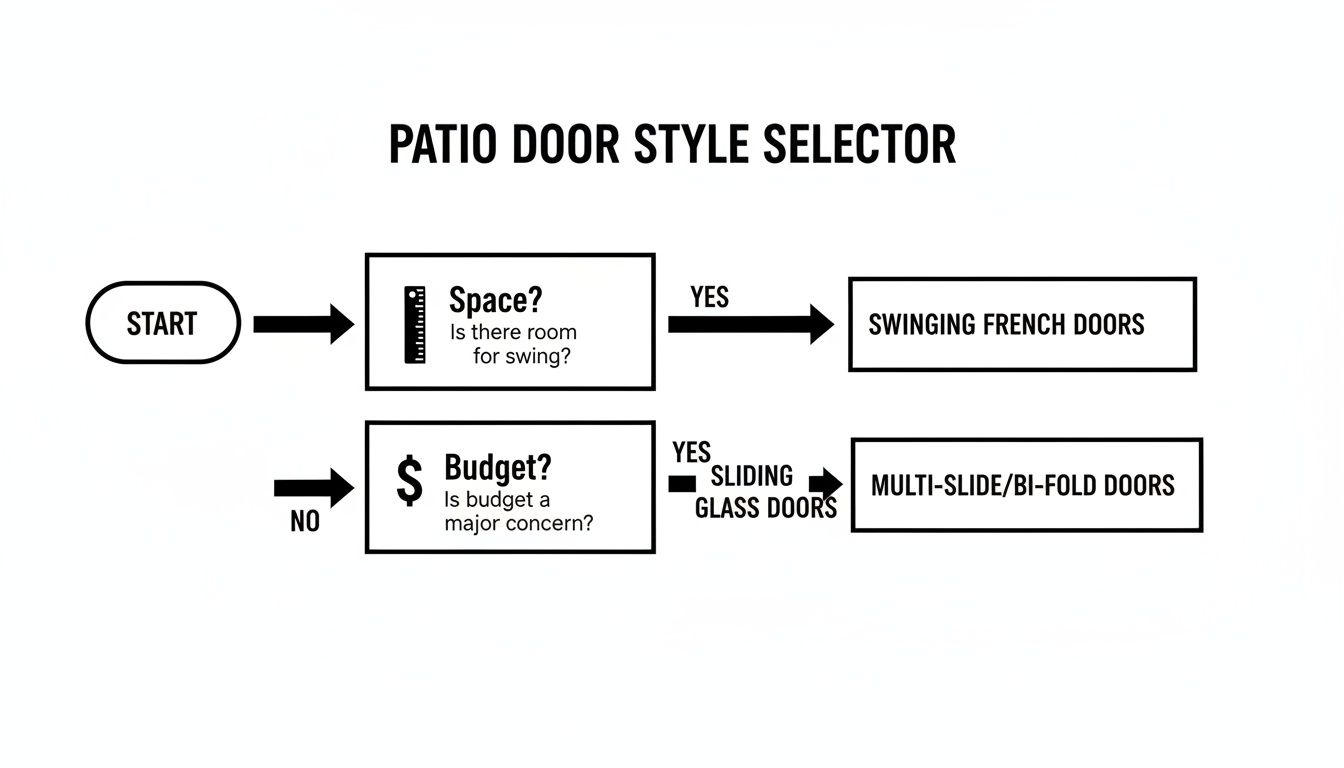
As you can see, a few key questions about your space and budget can quickly point you in the right direction. Now, let’s dig into the details of what makes each of these popular options tick.
Sliding Patio Doors: The Space-Saving Standard
The sliding patio door is the undisputed classic, and for good reason. It works on a simple track where one panel glides smoothly over another. This design is the ultimate space-saver because the door doesn't swing into your room or out onto your patio, meaning it takes up zero floor space to operate.
This makes it a perfect choice for rooms where furniture is right up against the door or for smaller patios where a swinging door would just get in the way. Modern sliders often feature slim, minimalist frames that maximize the glass area, giving you a beautiful, wide-open view of your backyard.
Their popularity in contemporary homes is undeniable. The market for sliding glass patio doors is projected to grow from USD 1.7 billion to USD 2.5 billion by 2035. This boom is all about bringing in more natural light and creating that seamless indoor-outdoor flow homeowners love. In fact, some studies show that homes with these doors can even sell up to 15% faster. You can see more data on this trend by reading the full report on sliding patio door market growth.
Quick Look at Sliding Doors:
- Pros: Highly space-efficient, generally cost-effective, huge glass panels for clear views, and simple to use.
- Cons: The opening is usually limited to half the unit's total width, and the track needs to be cleaned out once in a while to keep it from collecting dirt.
French Doors: Timeless and Elegant
There's just something about French doors. They bring a sense of tradition, charm, and a touch of grandeur to any home. Made of two hinged doors that swing open from the middle, they create a wide and incredibly welcoming entryway when you open them both up. No center post gets in your way, just a completely clear passage.
These doors are perfect for connecting a dining room to a garden or a living area to a deck, adding a bit of classic architectural flair. You can have them swing into the room or out onto the patio, depending on your layout. Most people prefer an out-swing design to save precious interior floor space.
Expert Insight: "While a single hinged patio door works great for smaller openings, it's the double-door French configuration that really delivers that 'grand entrance' experience. It turns a simple doorway into a major architectural feature."
This style feels right at home in traditional, farmhouse, or transitional architecture. And the flexibility is fantastic—you can open just one door for a quick trip outside or throw them both open when you're entertaining.
Bi-Fold Doors: The Ultimate Indoor-Outdoor Connection
If your goal is to completely blur the line between your living room and your backyard, the bi-fold door is what you’re looking for. These systems are made of multiple panels that fold up accordion-style, stacking neatly and compactly against the side of the opening.
The result is truly spectacular: a wall-sized opening that makes your patio feel like a natural extension of your home. Bi-fold doors are the gold standard for people who love to entertain and want a serious "wow" factor. They can span incredible widths, making them a go-to choice for modern homes with big patios or killer views.
Of course, all that impressive engineering comes at a price. They are a higher-end option, and the installation is more complex, requiring a sturdy header above the door to handle the weight of all those panels when they're stacked.
Key Features of Bi-Fold Systems:
- Wide, Unobstructed Openings: Can literally make an entire wall disappear.
- Modern Aesthetic: Gives your home a sleek, high-end look.
- Flexible Operation: You can usually get one with a "traffic door" that swings open on its own for everyday use, so you don't have to unfold the whole system.
Multi-Slide and Pocket Doors: The Disappearing Wall
Ready to take the idea of a wide-open doorway to the next level? Multi-slide and pocket doors deliver a breathtaking panoramic experience that’s hard to beat.
A multi-slide door has several large glass panels that slide on individual tracks and stack together at one end. This creates an opening that can be two-thirds or even three-quarters of the total door width—way more than the 50% opening of a standard slider.
A pocket door goes one step further. The panels slide completely into a hidden compartment built right into your wall, vanishing from sight. This is the ultimate way to create a completely seamless transition, leaving nothing but open air between you and the outdoors.
Both of these are premium patio door replacement options that need serious planning and a bigger budget. They’re best suited for new construction or major remodels where the wall can be engineered to accommodate the system. But for a home with an amazing view, the jaw-dropping effect is absolutely worth it.
Choosing the Right Material for Your New Patio Door
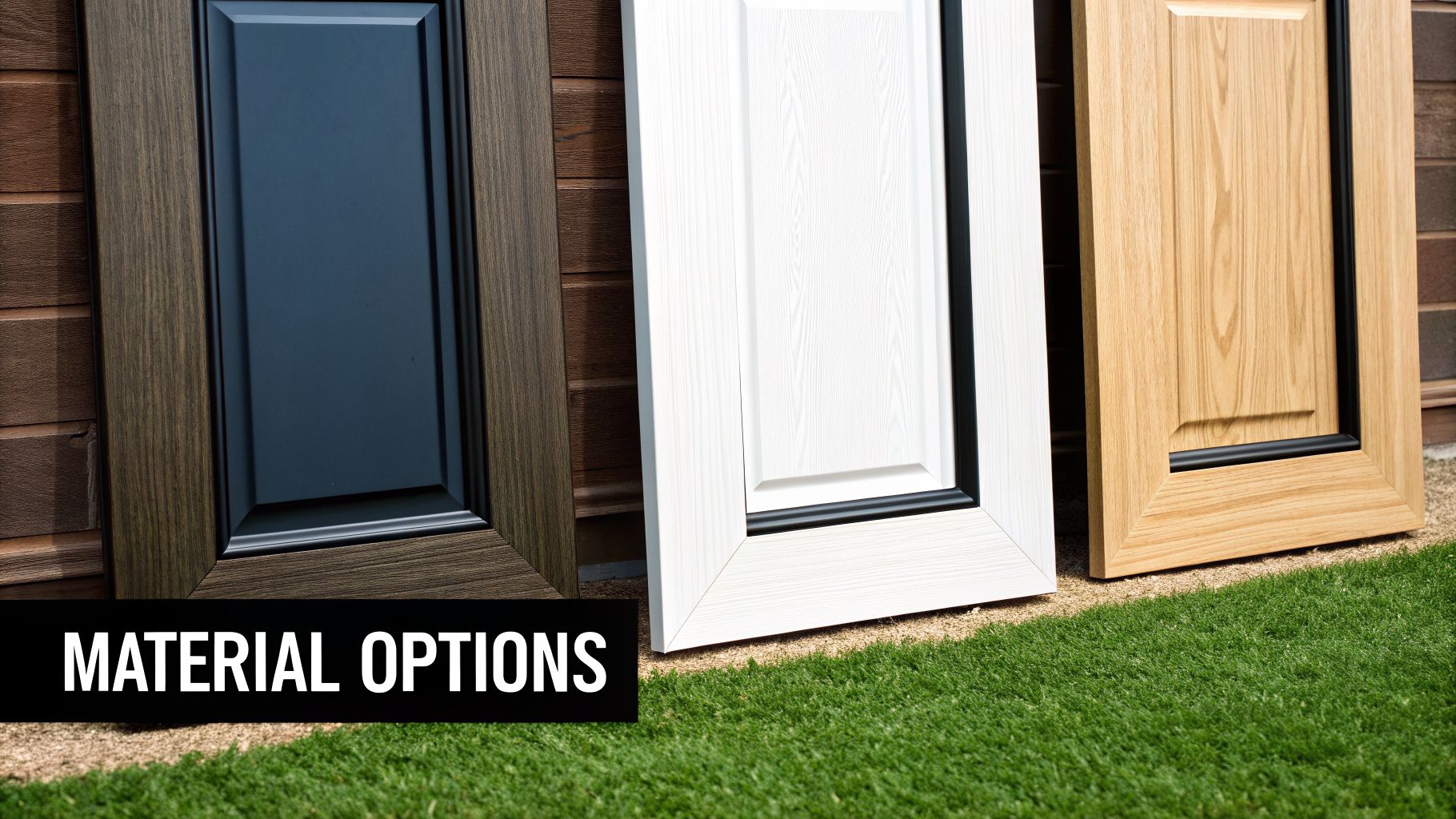
Once you've settled on a style, the next big decision is the material your patio door is made from. This choice is the foundation of its performance, dictating everything from its durability and energy efficiency to how much maintenance it will need down the road. It’s a bit like picking the right tires for your car; you need something that can handle the local conditions.
Here in the Central Valley, that means standing up to intense summer heat and significant temperature shifts without warping, fading, or failing. Each material brings its own unique blend of strengths and weaknesses to the table. Your perfect fit will depend on what you value most—be it budget, a specific look, or long-term, hands-off resilience.
Let's dig into the most common materials to see how they really stack up.
Vinyl: The Practical and Popular Choice
Vinyl is the undisputed workhorse in the world of patio doors, delivering a fantastic balance of performance and affordability. Made from a sturdy PVC (polyvinyl chloride) compound, vinyl frames provide excellent insulation without the premium price tag you’d find on other options.
Perhaps its biggest selling point is that it's an incredibly low-maintenance material. The color is mixed right into the vinyl itself, so there's no paint to chip or peel and you'll never have to stain it. It’s also completely moisture-proof, meaning rot and corrosion are non-issues. If you're looking for a practical, "set it and forget it" solution, vinyl is tough to beat. You'll find that modern vinyl windows offer similar benefits for the rest of your home, too.
- Pros: Very affordable, excellent energy efficiency, and requires almost no maintenance.
- Cons: Lower-quality vinyl can be susceptible to warping in extreme heat, and color choices are often more limited than other materials.
Fiberglass: The Durability Powerhouse
If you need a material that can take a beating from the Fresno sun and laugh it off, fiberglass is your champion. Fiberglass frames are incredibly strong and dimensionally stable. What does that mean? They barely expand or contract as temperatures soar and dip, making them highly resistant to warping, cracking, and swelling.
You can get fiberglass doors with either a smooth finish or a surprisingly convincing wood-grain texture. This lets you paint or stain it to perfectly match your home's style, giving you the rich look of wood without all the demanding upkeep.
Why Material Matters: "Choosing a material like fiberglass that resists thermal expansion is key. When a door frame warps, it can compromise the seal, leading to drafts, water leaks, and difficulty operating the door. A stable material ensures a tight fit and peak performance for years."
This resilience is why homeowners are flocking to fiberglass. The entire aftermarket for doors is seeing a 9.4% CAGR as people replace older, less efficient units. Materials like fiberglass and vinyl are driving this trend, with the fiberglass door market alone projected to jump from USD 15.64 billion to USD 17.16 billion in a single year. People are tired of warped doors and high energy bills. You can explore more insights on the booming door market on ResearchAndMarkets.com.
Wood: The Classic and Timeless Beauty
Let's be honest—nothing can quite match the warm, authentic beauty of a real wood patio door. It brings a classic, high-end feel that can elevate the architectural character of any home. As a natural insulator, wood also provides great thermal performance. Plus, you can stain or paint it in a nearly endless array of colors for a truly custom look.
Of course, that timeless beauty comes at a price: maintenance. To keep a wood door looking and performing its best, you have to commit to regular sealing, painting, or staining. This protects it from moisture, insects, and sun damage. Without that diligent care, it can warp, rot, or swell, especially in our climate.
- Pros: Unmatched aesthetic appeal, great natural insulation, and highly customizable finishes.
- Cons: Requires significant ongoing maintenance and is the most vulnerable to weather-related damage if not properly cared for.
Aluminum: Sleek and Modern Strength
For a clean, modern aesthetic with razor-thin sightlines, aluminum is in a class of its own. Because aluminum is so strong, the frames can be made much narrower than with other materials. This maximizes your glass area, giving you a wider, more dramatic view of the outdoors. It's a perfect match for contemporary and minimalist homes.
Years ago, aluminum had a bad reputation for energy efficiency, but modern aluminum doors have solved that problem with a thermal break. This is simply a strip of less conductive material built into the frame that stops heat and cold from passing through. While still not quite as insulating as vinyl or fiberglass, it makes aluminum a solid choice for our climate. It’s also lightweight, durable, and won't rust.
Understanding Energy Efficiency and Security Features
A new patio door is so much more than just an entryway; it’s a major upgrade to your home's comfort, value, and safety. Once you look past the style and material, the technical specs are what really separate a decent door from a fantastic one. Getting a handle on these details means your beautiful new door will also be a high-performance barrier against both the weather and potential intruders.
Think of energy ratings on a door like the nutrition label on your food—they give you the real story. The two most important numbers you’ll see are the U-factor and the Solar Heat Gain Coefficient (SHGC).
A low U-factor means the door is a great insulator, keeping your precious heat from escaping during the winter. On the flip side, a low SHGC is what you want to block the sun’s blistering heat from getting inside during our hot summers. That translates directly into lower air conditioning bills.
Decoding the Language of Energy Efficiency
So how do modern doors achieve these impressive performance numbers? It all comes down to advanced glass technologies working together. These aren't just minor add-ons; they're the core components that create a powerful thermal shield for your home.
When you're shopping for a new patio door, these features are basically non-negotiable if you want to maximize your comfort and energy savings.
Double-Pane Glass: This is the bare minimum for any quality door today. It involves two panes of glass separated by a sealed space, which is far better at stopping heat transfer than an old-school single pane.
Argon Gas Fills: To take insulation to the next level, that space between the panes is often filled with an inert gas like argon. Since argon is denser than air, it's even better at slowing down the movement of heat and cold.
Low-E Coatings: This is the real magic. A Low-Emissivity (Low-E) coating is a microscopically thin, transparent layer of metal oxide on the glass. It’s like a smart filter, reflecting heat back to its source—keeping heat inside during winter and outside during summer.
Choosing energy-efficient glass is one of the smartest long-term investments you can make in your home. The upfront cost might be a little more, but the payback in lower utility bills and a more comfortable house continues for years and years.
Bolstering Your Home's Security
Your patio door should offer more than a pretty view—it needs to be a solid line of defense. Older sliding doors, especially, were notorious weak spots. Thankfully, today’s doors have come a long way, with robust security features that offer some serious peace of mind.
A door’s security is only as strong as its weakest link. That’s why modern systems are designed to reinforce every potential point of failure, from the lock right down to the glass itself.
Key Security Features to Look For
When you’re comparing doors, look closely at the hardware and the overall construction. High-quality security features are engineered to frustrate and resist break-in attempts, making your home a much less appealing target.
Here are the critical security elements you should insist on:
Multi-Point Locking Systems: This is a huge upgrade. Instead of a flimsy latch, these systems bolt the door into the frame at several points—usually top, middle, and bottom. It creates an incredibly strong, pry-resistant seal that’s a world away from old, single-latch locks.
Impact-Resistant Glass: Often called laminated glass, this option has a tough, clear interlayer sandwiched between two panes of glass. If someone tries to break it, the glass will crack and spiderweb but stay held together in the frame, preventing a quick and easy entry.
Reinforced Frames: The best doors have sashes that are structurally reinforced, often with steel or aluminum hidden inside the vinyl or fiberglass frame. This adds serious rigidity and stops the frame from being bent or pried open.
Navigating Installation and What to Expect on Price
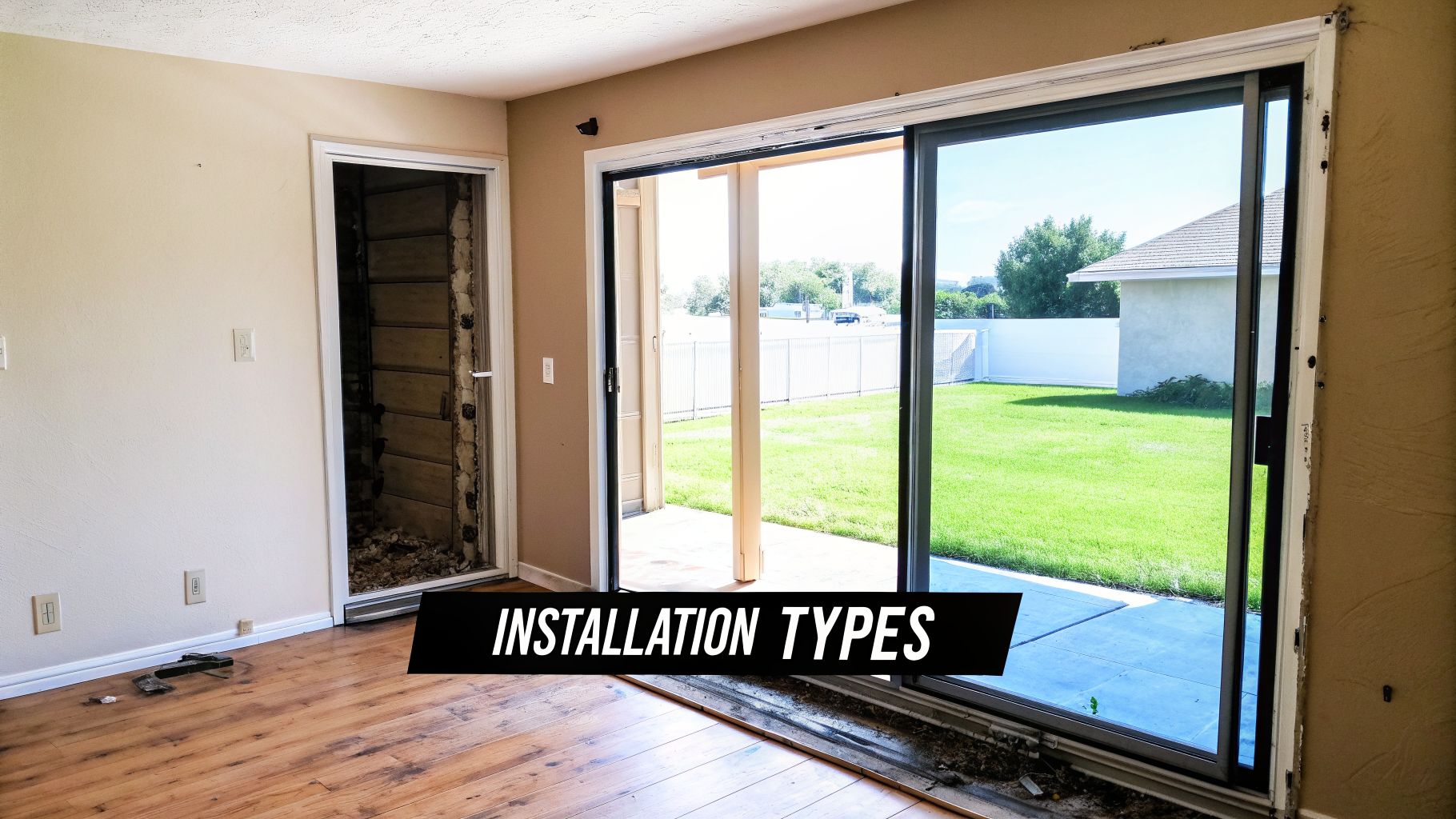
When it comes to the actual replacement, the process itself can seem a bit intimidating, but it really boils down to two main approaches. Understanding them upfront helps you know exactly what to expect on installation day, with no surprises. The choice between an insert replacement and a full-frame replacement all comes down to the health of your existing door frame.
An insert replacement is the simpler of the two. Think of it like swapping out a picture in a picture frame; the main frame stays on the wall, and you just put a new picture inside. This method is faster, less disruptive to your home, and usually easier on the wallet. But there's a catch: it only works if your current door frame is in great shape—no rot, no water damage, and still perfectly square.
Full-Frame vs. Insert Replacement
A full-frame replacement, on the other hand, is the more heavy-duty option. Here, we're not just taking out the old door; we're removing everything—the door, the frame, the trim, the whole works—right down to the raw studs of your house. It's definitely more involved.
So why do it? This is the necessary route when the old frame is damaged, rotted, or leaking. By starting fresh from the studs, we can fix any hidden water damage in the wall, ensure a perfect fit, and create a completely new, weatherproof seal. It’s the only way to guarantee your new door will last for decades without issues.
This is where a professional eye is invaluable. A seasoned installer can tell you right away if a simple insert will do the trick or if a full-frame job is the only way to protect your home and your investment.
Breaking Down the Total Project Cost
The final price tag for your new patio door is really two parts: the cost of the door itself and the cost of the labor to put it in. The range is pretty wide, so it helps to have a ballpark idea. A standard sliding vinyl door might start around $3,000 installed, whereas a big, beautiful multi-panel bi-fold door could easily run $30,000 or more.
Here’s a look at how those costs break down:
- The Door Unit: This is your biggest variable. The style, material, size, and any energy-efficient upgrades you choose will all impact the price. Fiberglass and wood are premium materials, and larger doors like 4-panel sliders will naturally cost more.
- Professional Installation: Labor costs can range anywhere from $300 to over $1,000. It all depends on the job's complexity. A straightforward insert replacement will be on the lower end, while a full-frame installation that requires reframing the opening will be higher.
- The "What Ifs": It's smart to budget for potential extras. Sometimes, once the old door is out, we find rotted wood that needs replacing. You might also need new trim work or want a custom paint or stain to finish the job.
At the end of the day, paying for a professional installation is non-negotiable. It protects your warranty and ensures the door works exactly as it should. This step is every bit as important as picking the right patio door replacement options in the first place. If you're working with a tight budget, you can sometimes get lucky and check for surplus windows and doors that might be a perfect match for a standard-sized opening.
Why Working With a Local Expert Matters
Picking out the perfect patio door is a big step, but who you hire to install it is arguably even more important. It's tempting to go with a big-box store for convenience, but there’s a world of difference when you partner with a dedicated local company. For them, it's not just another job on a spreadsheet; it's their reputation on the line right here in our community.
A local pro lives and breathes the Central Valley climate. They’ve seen firsthand what our intense sun and drastic temperature shifts can do to a home. They’ll guide you to the materials and installation methods that are proven to last for decades in this environment, protecting your investment long-term.
The In-House Advantage
Here’s one of the biggest distinctions you'll find: the installation crew. Many national chains farm out their installations to the lowest-bidding subcontractor. This can be a real roll of the dice, often leading to inconsistent workmanship and a frustrating runaround if a problem pops up later.
A truly professional local company, on the other hand, will use its own in-house, factory-trained installers. This is a huge deal, and here’s why:
- Consistent Quality: Every installer is trained to the same high standard, so you know the job will be done correctly from the start.
- Clear Accountability: You have one company, one phone number, and one point of contact. No finger-pointing, just solutions.
- Peace of Mind: You can rest easy knowing the crew in your home is fully insured with liability and workers' compensation coverage, protecting you from any risk.
A top-of-the-line patio door is only as good as its installation. A sloppy install can cause drafts, leaks, and security vulnerabilities, completely negating the benefits you paid for and often voiding the manufacturer's warranty.
Beyond the Installation
The relationship doesn't just end once the truck pulls away. A local expert stands behind their work with solid warranties and ongoing support because their business thrives on the referrals of happy neighbors.
Plus, you get the irreplaceable experience of visiting a local showroom. There's simply no substitute for seeing and touching the patio door replacement options yourself. Being able to slide a door open, feel the weight of the frame, and see the finish in person gives you a confidence that no website or catalog ever could.
Your Top Patio Door Questions, Answered
Once you've narrowed down the styles and materials, a few practical questions usually pop up. It's completely normal. Let's tackle some of the most common things homeowners ask right before they pull the trigger on a new patio door.
How Long Will My House Be Open During Installation?
Most of the time, we can get a standard patio door replacement done in a single day. A straightforward "insert" replacement, where we fit the new door into the existing frame, can be wrapped up in just a few hours. We aim to make the process as quick and painless as possible.
If you're going for a full-frame replacement, things are a bit more involved since we're taking everything out down to the studs. Even so, our professional crew is a well-oiled machine. They work fast to get your home sealed up and secure, and can usually still finish the job before the end of the day.
Will a New Patio Door Actually Lower My Energy Bills?
Yes, it really can make a difference. An old, leaky patio door is a huge energy drain, letting your expensive air-conditioned air slip right outside. Upgrading to a modern, energy-efficient door will make a noticeable dent in your heating and cooling costs, especially with our hot summers.
Think of it this way: new doors with features like double-pane glass, Low-E coatings, and argon gas create a powerful thermal shield. This technology is specifically designed to block the sun's heat and keep the cool air inside where it belongs, leading to real savings on your utility bills month after month.
A high-quality patio door isn't just another home expense; it's a smart investment in your comfort and your wallet. The money you save on energy bills adds up, giving you a tangible return on your investment for years to come.
Why Should I Go with a Specialized Installer?
You could hire a general contractor, but a dedicated door supplier and installer brings a whole different level of expertise to the table. They live and breathe doors. This means you get access to a better selection of top-quality products and, more importantly, an in-house installation team that's been factory-trained to install them perfectly.
It just makes the whole process smoother. You have one point of contact from the moment you start shopping to the final inspection. This usually comes with better warranties and the simple peace of mind that the people doing the work are true experts who will get it right the first time.
Ready to find the perfect patio door for your home? The team at Equity Building Materials, Inc. has been serving the Central Valley for over 30 years with expert guidance and professional, in-house installation. Explore our patio door options and get your free estimate today!
Prepared with Outrank app